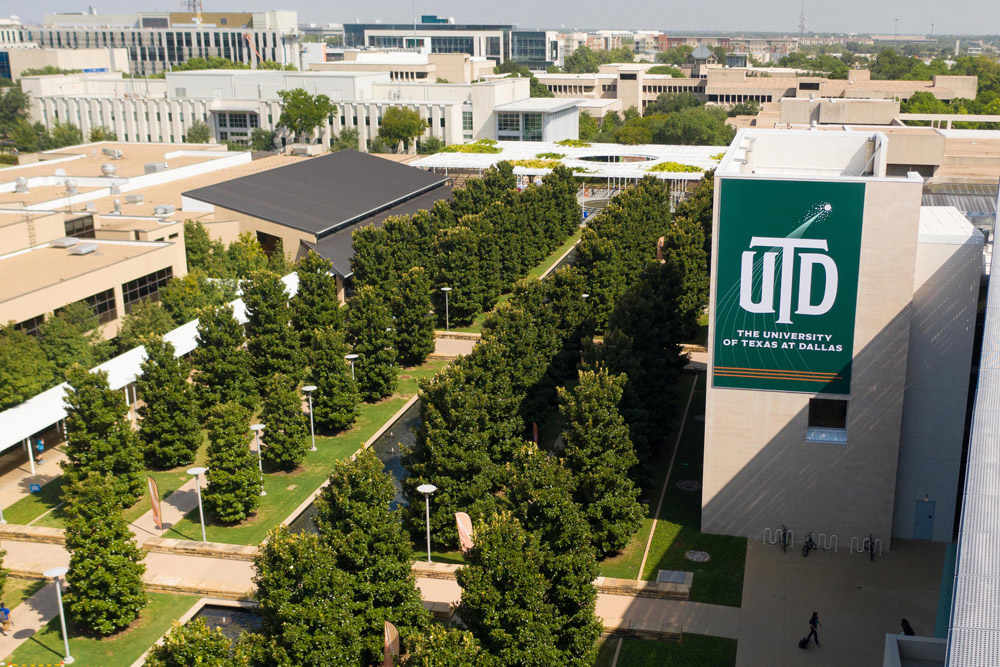

Dallas is home to numerous educational institutions, but today we’ll focus on one of the city’s most prominent research universities — the University of Texas at Dallas (UTD). The university was established at the request of the Texas-based corporation Texas Instruments, which needed highly qualified engineers and scientists. Learn more about its history and development on i-dallas.com.
History of the University
The university’s story began in 1969. On June 13, 1969, Texas Governor Preston Smith signed House Bill No. 303, officially adding the institution to the University of Texas System.
UTD was founded on the foundation of the Southwest Center for Advanced Studies (SCAS), which was established between 1959 and 1960. The founders of Texas Instruments — Erik Jonsson, Eugene McDermott, and Cecil Green — played a key role in creating the institution. They donated both land and facilities to support the new university, aiming to promote science and education in the region.
The university officially opened on September 1, 1969, initially offering only graduate and doctoral programs in science and engineering. Francis Johnson became the first president of the university. In 1972, UTD received its accreditation, and by 1973, the first graduates earned their degrees. The undergraduate program was launched in 1975.
Several buildings played a major role in shaping the university’s early identity. For instance, the Founders Building was one of the first structures on campus and served as the main site of operations when the university opened in 1969. It remains a symbol of UTD’s academic and scientific beginnings.
Another significant landmark is the Erik Jonsson Academic Center, named after one of the university’s founders and a co-founder of Texas Instruments. As of 2025, it continues to serve as one of UTD’s primary academic facilities, equipped with state-of-the-art laboratories and research spaces.
The Development of the University of Texas at Dallas
Today, UTD offers more than 140 degree programs at the bachelor’s, master’s, and doctoral levels, spanning disciplines such as computer science, engineering, biomedicine, business, and the humanities.
The university currently serves over 30,000 students, with 20% enrolled in graduate programs.
UTD is particularly renowned for its research excellence. Each year, the university conducts scientific research with a budget exceeding $120 million. Its research centers are leaders in fields such as photonics, biomedical technology, materials science, and artificial intelligence.
The university also maintains strong partnerships with both local and international companies — including Texas Instruments, Raytheon, and Ericsson — fostering innovation, supporting startups, and driving technological progress across the region.
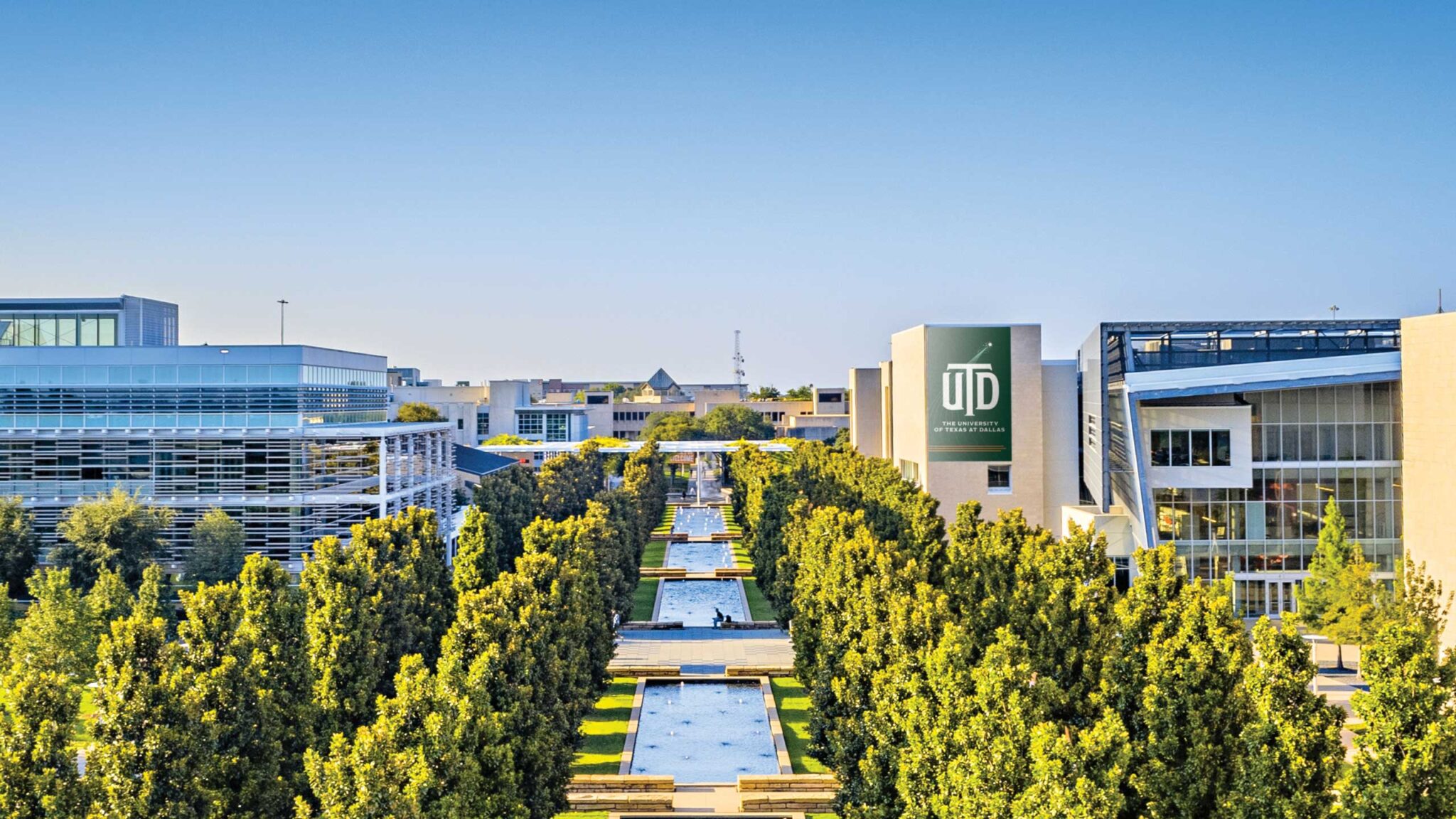
The University of Texas at Dallas also boasts an impressive infrastructure: modern laboratories, a supercomputing research center, a 500-acre campus, and residential complexes for students.
Today, UTD ranks among the top universities in the United States for the quality of its education and research. Its contributions to scientific advancement and workforce development are immense — UTD graduates go on to become outstanding professionals in their respective fields.
We hope you enjoyed this article and learned something new about our city and one of its most remarkable educational institutions.