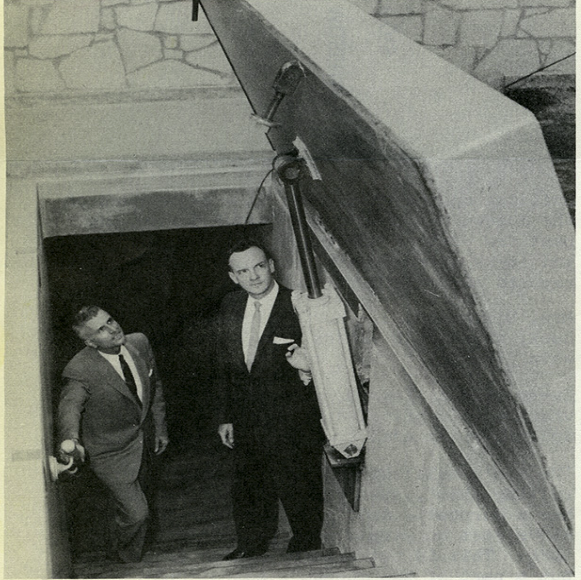

In the early 1960s, Dallas, like the rest of America, lived in the shadow of the mushroom cloud. This looming threat forced residents to look for safety beneath layers of concrete and steel. While modern skyscrapers continued to rise toward the Texas sky, a hidden world was taking shape beneath them—a network of shelters designed to be a lifeline in the event of a nuclear strike. The history of these structures is a saga of strategic defense and a mirror of an era defined by fear and the incredible engineering ingenuity that forever altered the city’s underground landscape. Read more at i-dallas.
The Fallout Program
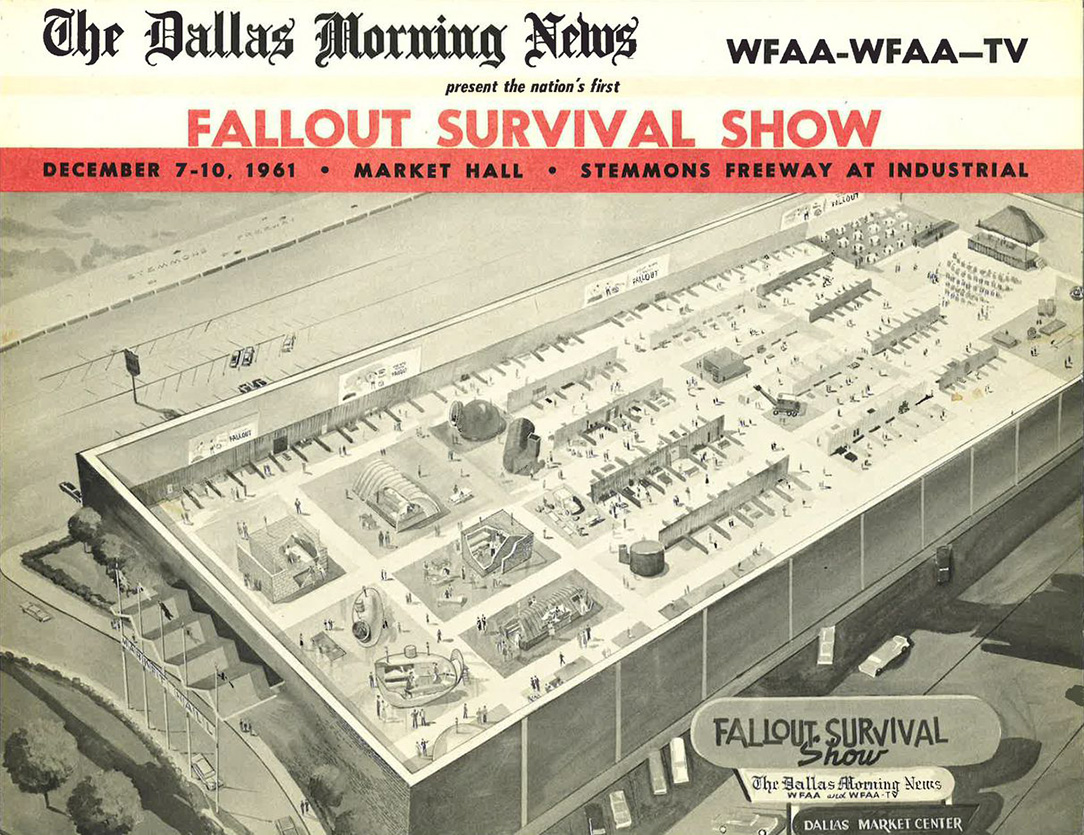
According to records from the Civil Defense Museum, Dallas began systematic preparations for a nuclear threat in 1961, following a call to action by President John F. Kennedy. The strategy didn’t focus on building new bunkers from scratch; instead, the goal was to repurpose existing architecture. U.S. Army Corps of Engineers and local experts meticulously surveyed thousands of buildings across the city. The primary metric was the “protection factor”—walls and ceilings had to be thick enough to reduce outside radiation by at least 100 times.
This initiative gave birth to the iconic yellow-and-black “Fallout Shelter” signs that soon appeared on schools, banks, and government offices. By 1963, hundreds of sites in Dallas were officially licensed. For instance, the massive reinforced concrete structures in the historic Fair Park district—originally built for the 1936 Centennial Exposition—proved to be ideal. These pavilion basements were prepared to house thousands, essentially serving as temporary underground dormitories.
The Emergency Operations Center (EOC)
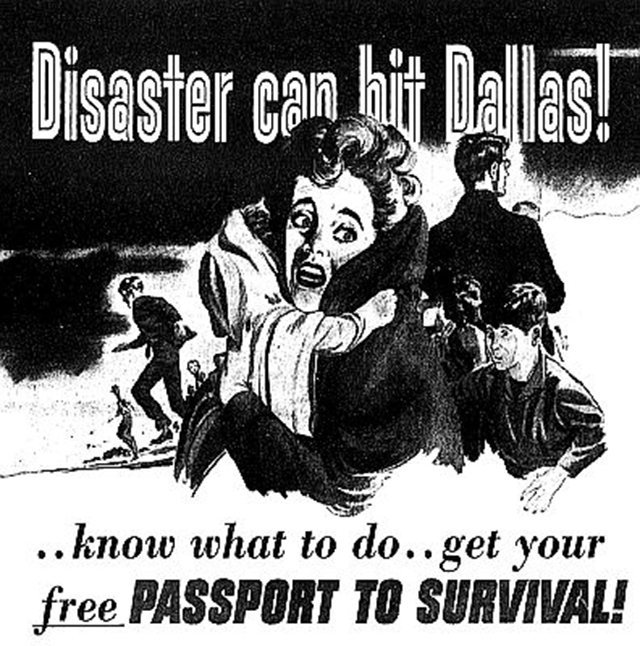
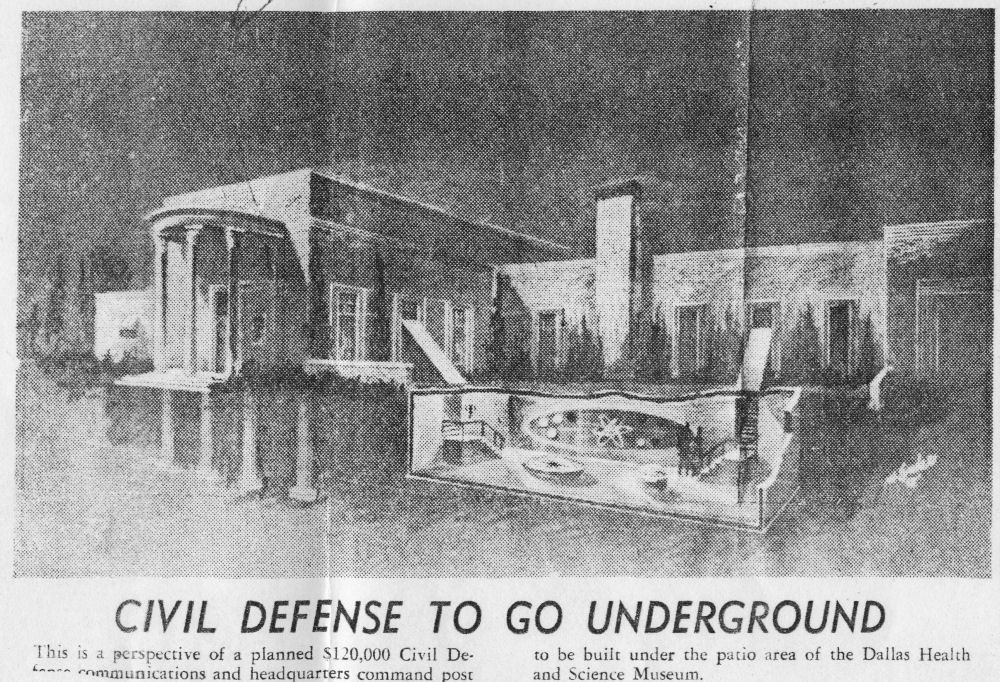
The crown jewel of Dallas’s defense system was the Emergency Operations Center (EOC). Built in 1961 beneath the Health and Science Museum at Fair Park, the facility was a technological marvel of its time. Costing approximately $214,000, the project resulted in a fully autonomous bunker spanning over 5,000 square feet.
Behind massive blast doors lay the nerve center of city government. The bunker featured heavy-duty diesel generators and an advanced air filtration system designed to block radioactive dust. Inside were communication rooms with direct lines to Washington, D.C., dedicated workspaces for the mayor and emergency staff, and living quarters. Original maps still hang on the walls today, marked with concentric circles indicating blast zones. Designed for 30 days of total autonomy, the bunker was meant to ensure coordination and rescue efforts in the chaos following an attack.
Life Behind Closed Doors
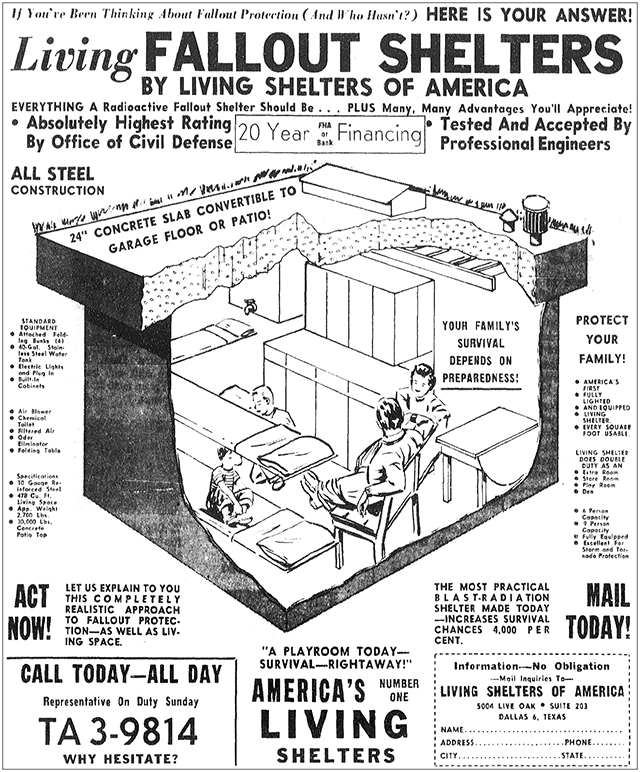
The logistical undertaking managed by Dallas authorities was staggering. Official shelters had to be stocked according to a strict federal inventory. The staple of the bunker diet was “Survival Biscuits”—high-calorie crackers designed for long-term storage. These were packed in large tin cans and stacked by the thousands in city basements.
Water was an even more critical concern. The government provided 17.5-gallon metal drums that, once filled, became the sole source of hydration for dozens of people. Beyond food, each shelter received “Sanitation Kits” that included chemical toilets, as city sewage systems were expected to fail. Medical kits contained basic supplies, dosimeters, and decontamination gear. Today, during renovations of older landmarks like Old City Hall or the Cotton Bowl, construction crews still occasionally stumble upon these sealed time capsules from the 1960s.
An Architectural Legacy
Interestingly, Cold War preparations heavily influenced the evolution of Dallas’s urban infrastructure. The Dallas Pedestrian Network—the system of underground tunnels downtown—was partially designed to provide quick access to shelters beneath skyscrapers. Buildings like Bryan Tower and the Republic National Bank were constructed with reinforced underground levels specifically registered with Civil Defense.
By the late 1970s, as global tensions began to thaw, most shelters were decommissioned. However, they didn’t vanish. Many were converted into server rooms, archives, or storage spaces. The vast basements under Fair Park remain a somber reminder of a time when the city’s survival depended on its ability to retreat into the Texas earth.
Today, these subterranean labyrinths attract historians, urban explorers, and filmmakers alike. In the basements of some government buildings, original survival supplies are still found in near-perfect condition, preserved by the unique microclimate of the concrete bunkers. In 2020, Dallas preservationists highlighted the EOC under Fair Park as a candidate for historical tourism, noting its status as a unique example of civil defense architecture. Once symbols of survival, the rusted “CD V-700” dosimeters and sealed water tins have now become highly sought-after artifacts of the Cold War.
Sources: