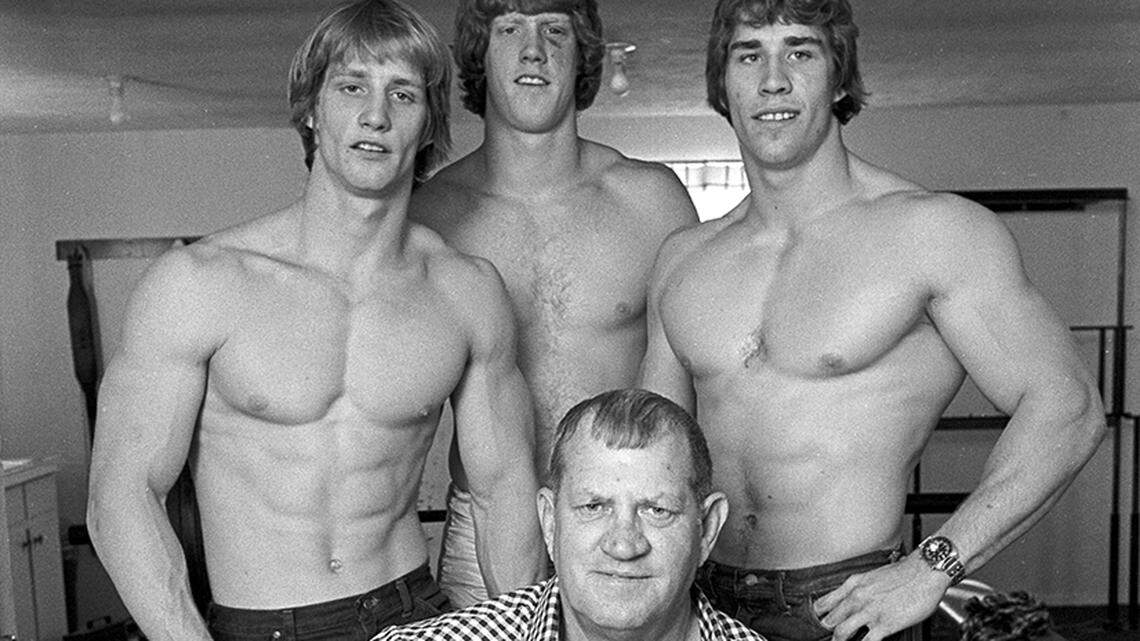

For Dallas in the 1980s, wrestling wasn’t just a staged show—it was a religion, and the Von Erich family were its gods. At the center of this cult stood the Sportatorium, an unassuming iron box on the corner of Industrial Blvd. and Cadiz St. It was here, amidst the smell of cheap popcorn, sawdust, and sweat, that the modern entertainment industry was born. Yet, behind the glitz of championship belts lay a story that would later be called the most terrifying curse in sports.
On i-dallas.com, we explore the details of the Von Erich family tragedy:
- How “America’s Loudest Oven,” lacking air conditioning, became the forge for revolutionary sports television;
- The introduction of high-energy entrance music and the creation of the world’s first youth idols in professional wrestling;
- How Fritz Von Erich was ahead of his time, introducing dynamic editing and instant replays that captivated audiences from Japan to Israel;
- Epic feuds with “outsiders” and the brothers’ grueling struggle to live up to an idealized on-screen image;
- A breakdown of the tragic string of deaths that destroyed the dynasty, leaving only one of six brothers alive.
The Sportatorium: A Concrete Temple and the “Forge” of Texas Wrestling
This modest building at the intersection of Industrial Boulevard and Cadiz Street had no air conditioning, and in the summer, temperatures inside rose to critical levels as spectators literally gasped in the humid heat. But every Friday, thousands stormed the entrance, turning the Sportatorium into the heart of World Class Championship Wrestling (WCCW). It was here that Fritz Von Erich, the patriarch of the legendary family, built his own sports empire, which challenged the industry’s national giants with its popularity and innovation.
Crowd Energy and the Smell of Sawdust: A Gladiator Arena Without Frills
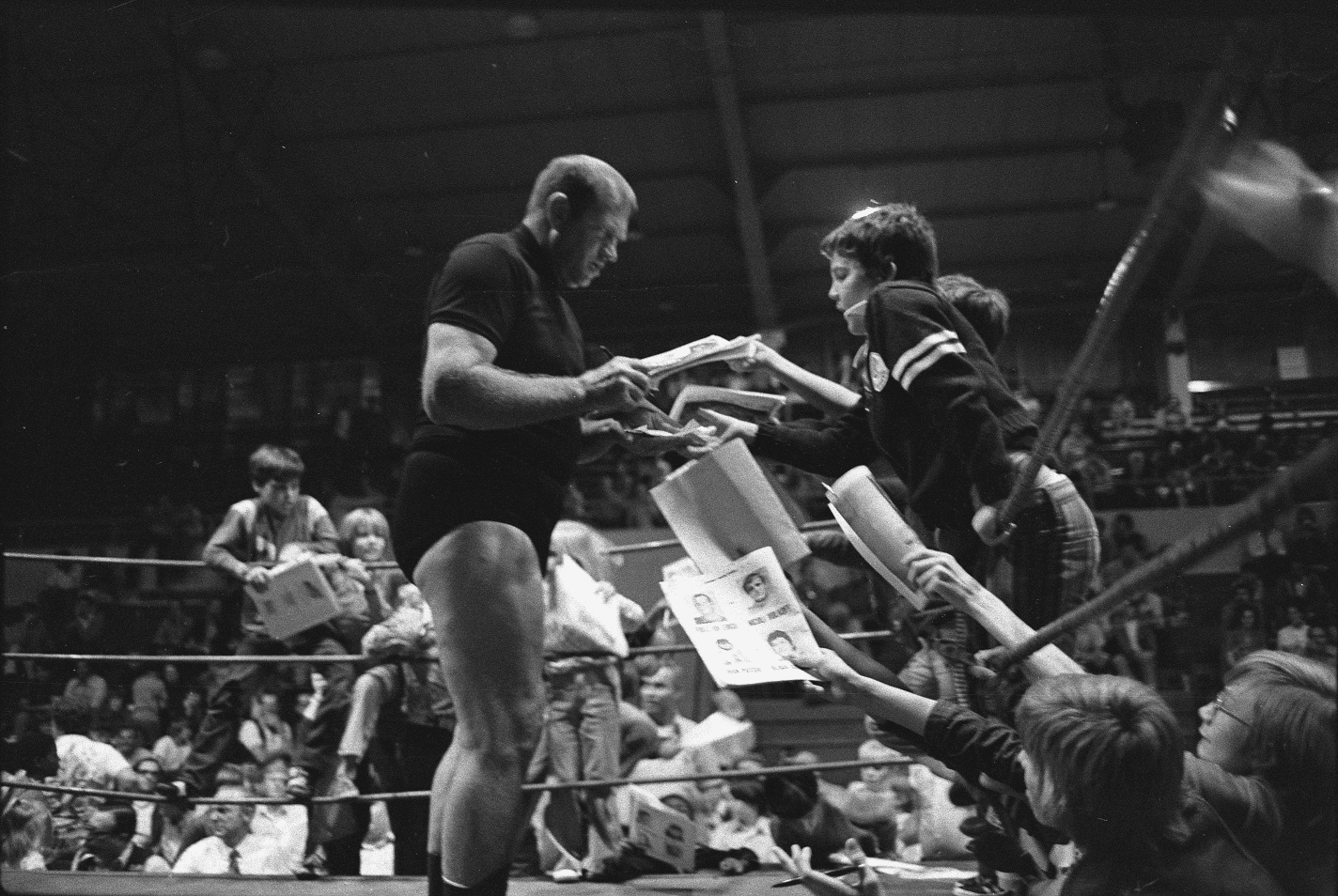
The arena was so cramped and intimate that fans could actually touch their heroes as they fought through the crowd to the ring. This created the effect of true gladiatorial combat, where every emotion and every drop of blood felt real to the spectator in the front row.
- Physical Proximity: Spectators often became involuntary participants in the show, finding themselves under a hail of sweat from athletes flying over the ropes, which only heightened the sense of danger.
- The “Sawdust Ritual”: The floor around the ring was thickly covered in sawdust—not for decoration, but to soak up blood and sweat after the “bloodiest” matches, which were considered the gold standard of spectacle in Dallas.
- Climatic Hell: The combination of cigarette smoke, heat, and the energy of 4,500 fans created a thick, almost tactile microclimate that the Western press dubbed “The Loudest Oven in America.”
- Legendary Feuds: These walls witnessed the beginning of the epic confrontation between the Von Erichs and The Fabulous Freebirds, which ignited after the scandalous cage incident on Christmas 1982.
A Revolution in Television Format and Global Expansion
Fritz Von Erich was one of the first in the world to understand the colossal power of television as a marketing tool. WCCW programs filmed at the Sportatorium were drastically different from the dull recordings of other promoters. The use of multiple cameras simultaneously, dynamic editing, close-ups of faces, and the first-ever slow-motion replays in wrestling were technological breakthroughs that changed sports broadcasting forever.
Thanks to this innovative approach, Dallas shows were broadcast with immense success in Japan, the Middle East, and Israel. Local Texas stars became global icons long before Vince McMahon launched his aggressive expansion with the WWE, making the Sportatorium the most recognizable arena in the wrestling world.
Music and Rock-and-Roll Aesthetics: Athletes as Idols
It was in Dallas that wrestling finally merged with pop culture. WCCW wrestlers began using rock hits for their ring entrances—a revolutionary move at the time. When brothers Kevin, David, or Kerry appeared to the powerful sounds of Rush’s “Tom Sawyer,” the arena exploded with an ecstasy usually reserved for global rock stars.
The Von Erich brothers, with their athleticism and long hair, became genuine youth idols and the primary sex symbols of Texas. Kevin Von Erich, who often performed barefoot, embodied the image of a “wild” but noble warrior, perfectly resonating with the rebellious spirit of the ’80s. This transformed a purely sporting event into a massive social phenomenon where the line between athletics and show business was permanently blurred.
The Von Erich Wrestling Family: From Triumph to Family Doom
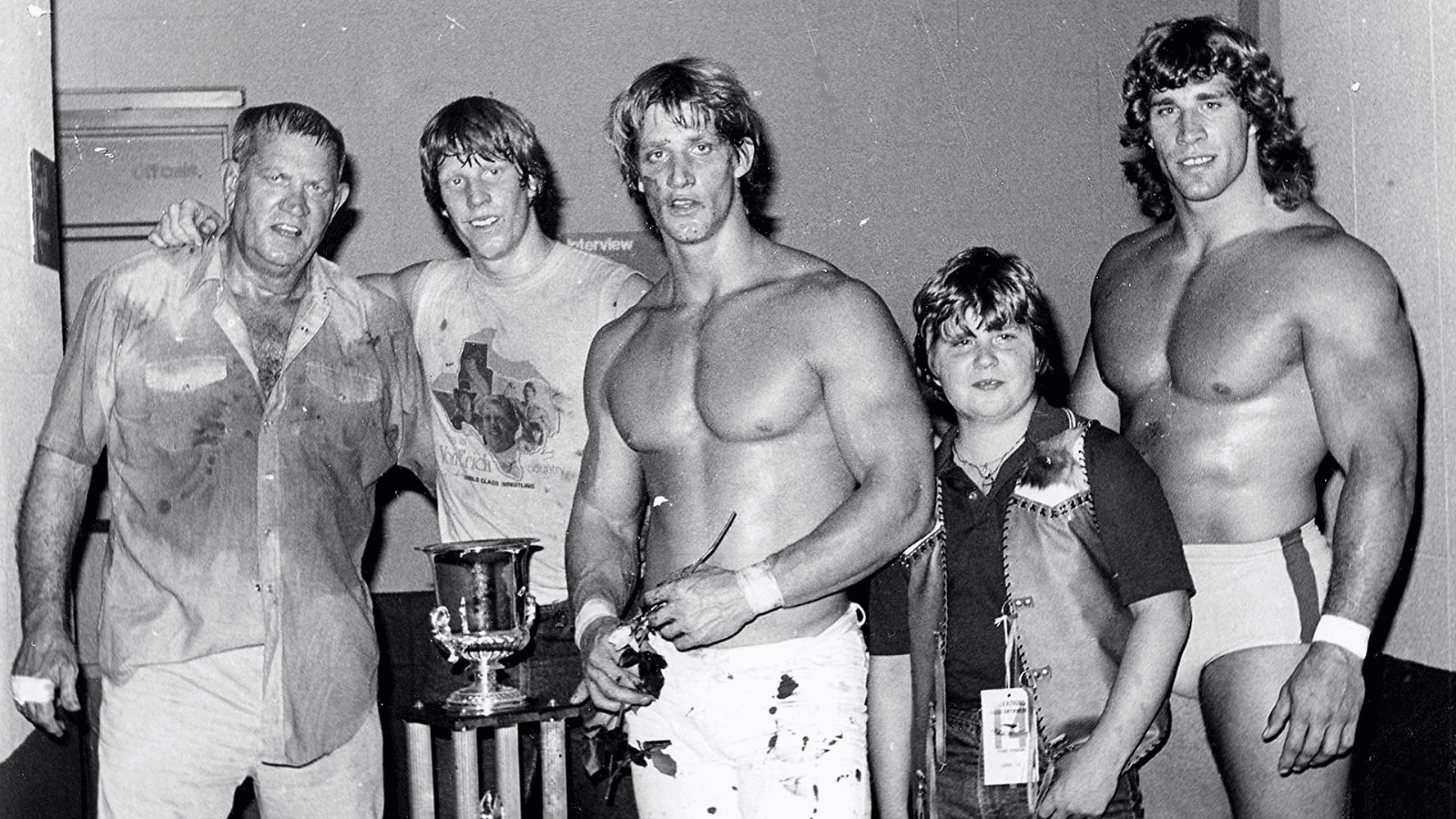
The symbol of the dynasty was the finishing move, The Iron Claw—when a wrestler squeezed an opponent’s temples with a massive palm, forcing them to their knees in unbearable pain. This gesture was more than a sport; it was the embodiment of Fritz Von Erich’s iron authority over his sons and the entire Texas wrestling industry. However, what brought undisputed victories in the ring and millions in capital proved completely powerless against real-life tragedies?
Brotherhood In and Out of the Ring
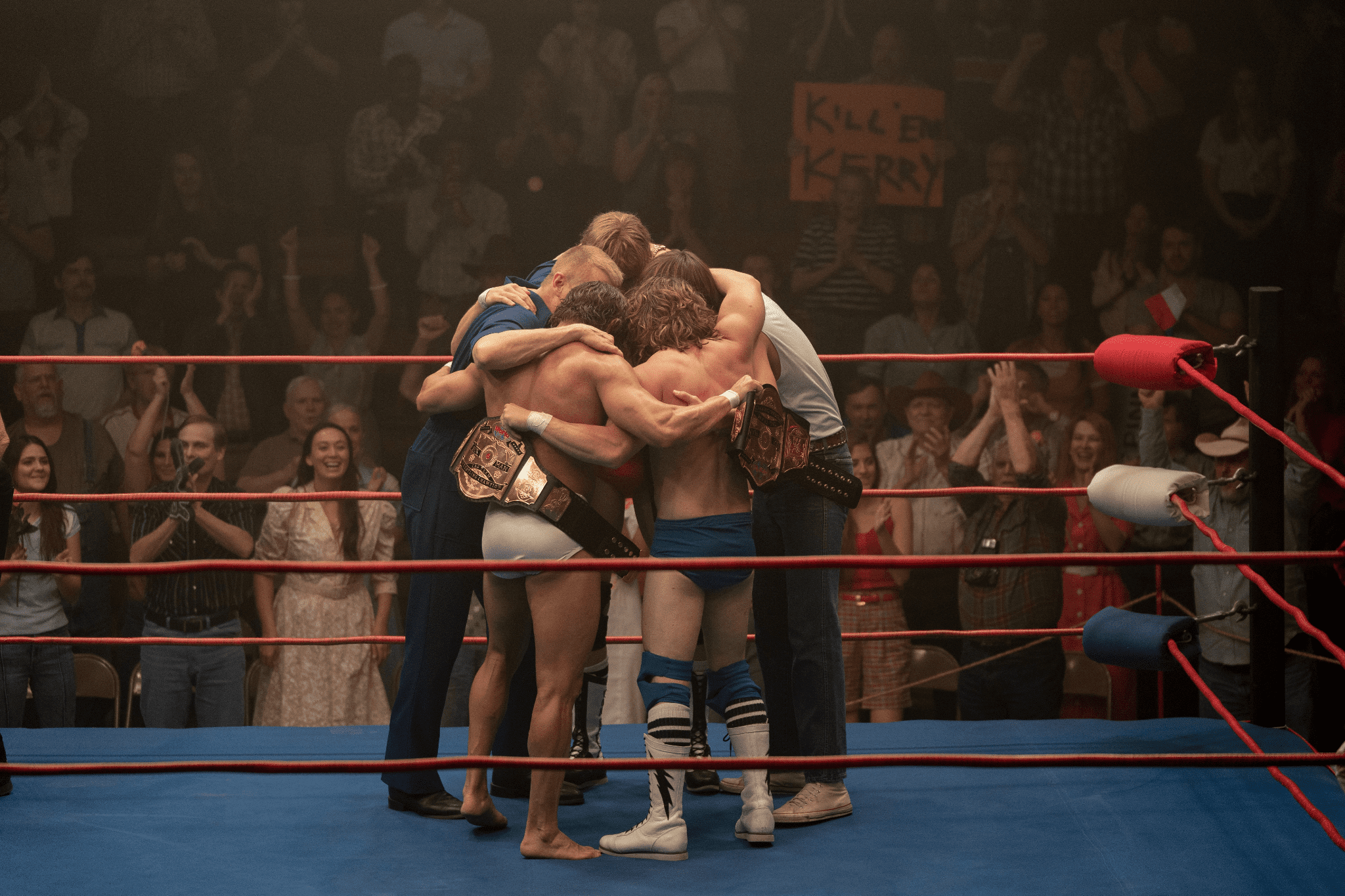
Kevin, David, Kerry, Mike, and Chris weren’t just colleagues—they were positioned as a single, indivisible monolith. Their collaborative work in the ring turned local sport into a widespread religion.
- Epic Feuds: Their rivalry with The Fabulous Freebirds is officially considered one of the greatest “feuds” (storyline rivalries) in the history of global wrestling.
- Battle for Identity: It wasn’t just a game but a principled fight for the honor of Texas against “outsiders” from Georgia, sparking fierce patriotic support from local fans.
- Filling Stadiums: The scale of their popularity allowed them to pack the legendary Texas Stadium to capacity, where tens of thousands watched their every move.
The Price of Fame and a Series of Tragedies
Behind the scenes of success lurked a grim reality. Attempting to live up to the artificially created image of perfect superheroes required superhuman effort that eventually broke them.
- The Beginning of the End: The first to go was David, known as the “Yellow Rose of Texas,” who died suddenly during a tour in Japan in 1984, marking the first crack in the family empire.
- Superhuman Sacrifice: After a motorcycle accident cost him his foot, Kerry continued to step into the ring on a prosthetic, hiding the fact even from his closest colleagues to maintain the myth.
- Psychological Breakdown: The younger brothers—Mike and Chris—simply could not withstand the colossal pressure of being compared to their legendary older brothers and the total, despotic control of their father.
The Family Curse as a Social Phenomenon
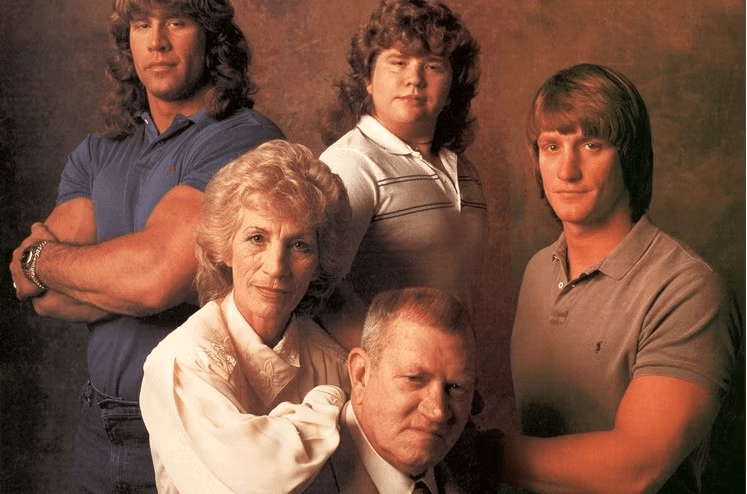
Today, the term “The Von Erich Curse” is firmly embedded in mass culture to describe the string of suicides and premature deaths in the family. This story serves as a classic example of how parents’ high ambitions can destroy those they are meant to protect.
- Destruction of a Dynasty: Of Fritz Von Erich’s six sons, only Kevin lived to old age, remaining the sole witness and guardian of the family’s rise and fall.
- Children as Cogs: The tragedy proved that children in this system were often viewed merely as tools for market conquest and maintaining the family business’s greatness.
Legacy: How Dallas Changed Global Wrestling
Despite the tragic finale, the Von Erich era at the Sportatorium laid the foundation for the modern sports industry. They were the first to prove that wrestling could be a high-budget serial with clear storylines and charismatic characters. Many elements used by the WWE today—from pyrotechnics to complex scripts—were tested and refined right in Dallas. Although the Sportatorium was demolished in 2003, the spirit of that era lives on in the memory of Texas and in recent Hollywood adaptations that have once again brought global attention to this somber yet magnificent legend.
Sources:
- https://screenrant.com/the-iron-claw-adkisson-family-von-erich-name-change-wrestling/
- https://www.britannica.com/sports/wrestling/Modern-wrestling
- https://www.cbr.com/true-story-von-erich-family-a24-the-iron-claw/
- https://www.theguardian.com/culture/2024/feb/08/i-dont-believe-in-a-curse-the-wrestler-who-lost-his-five-brothers
- https://people.com/all-about-the-von-erich-brothers-the-iron-claw-8409406