

Sha’Carri Richardson is not just the fastest woman on the planet; she is a living manifesto of South Dallas. She brought a steel character, forged by the strict upbringing of her grandmother, from the scorching tracks of Texas. Her long nails, vibrant wigs, and bold trash talk are not just a style—they are a psychological weapon and a tribute to Oak Cliff culture. Having walked through a public collapse and disqualification, she proved to the whole world a girl from the neighborhood can dictate her own rules to global sports without losing a single drop of her authenticity.
Below, on i-dallas.com, we examine the ups and downs of the legendary athlete:
- Why David W. Carter High School became the perfect proving ground for forming an aggressive winner’s style;
- The role of her grandmother and aunt in creating a psychological shell that cannot be pierced by criticism;
- How accent nails and tattoos became tools of dominance on the track and a reference to Flo-Jo’s legacy;
- The story of the 2021 fall and the triumphant return that made her the main icon of the 2024 Olympics;
- Why every victory for Sha’Carri is an act of self-assertion for thousands of girls from Texas.
Roots of Carter High: Where Character Was Tempered
Sha’Carri Richardson is not just a product of American track and field; she is a graduate of the legendary David W. Carter High School in Dallas. For anyone even slightly familiar with the cultural and sporting landscape of Texas, the name “Carter” isn’t just an educational institution. It is a synonym for sporting aggression, athletic dominance, and absolute resilience. It was here, on the scorching running tracks of South Dallas, that she learned life’s main lesson: everyone is equal at the start, but respect is only given to the one who tears the finish line ribbon first.
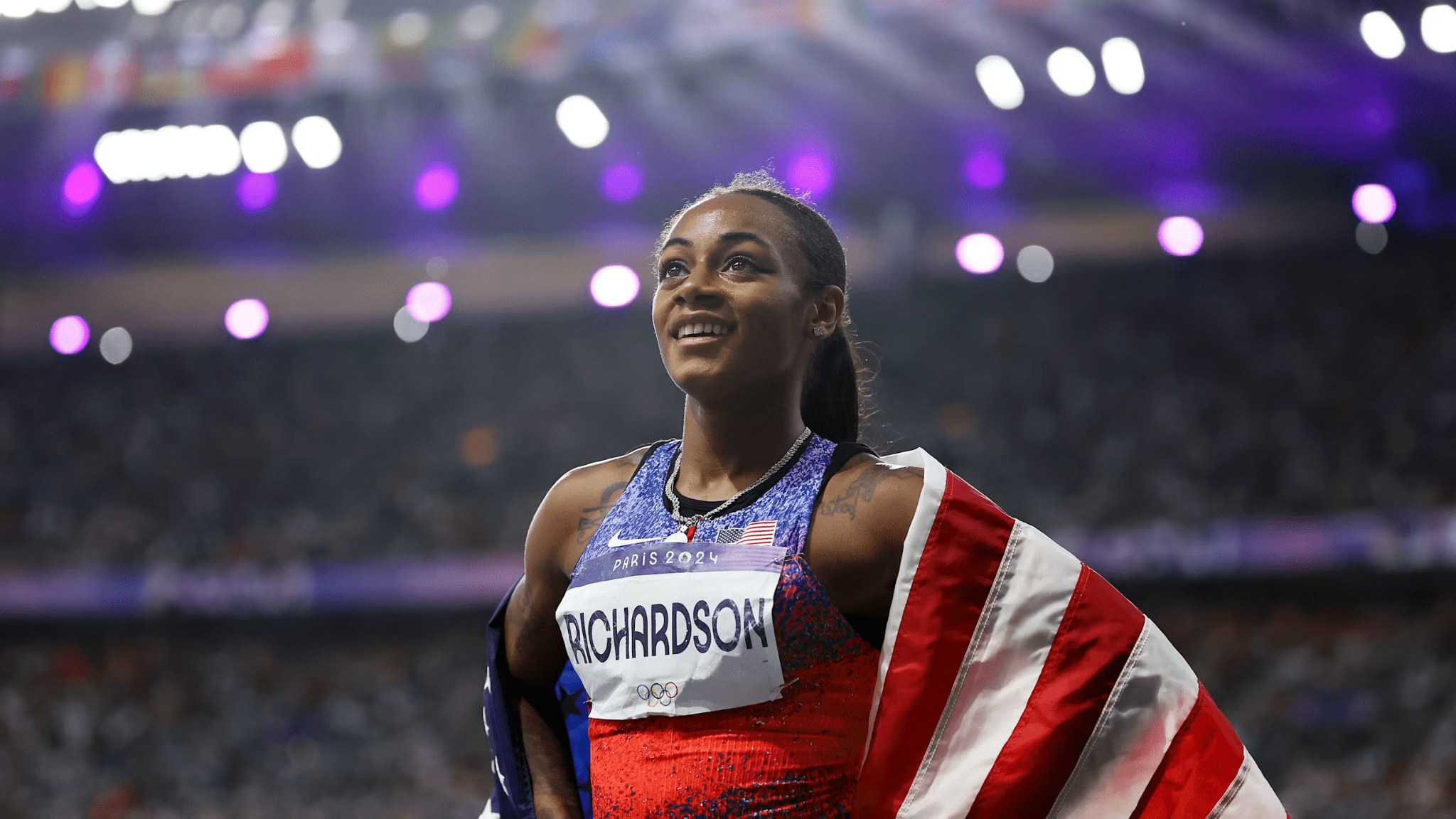
The Forge of Champions and the “Wolf Mentality”
Thus, the young athlete became part of David W. Carter High School. This is a true testing ground for character. Here, sport was never just entertainment or an extracurricular activity; it was a matter of survival, identity, and the future. It was in this harsh environment that Sha’Carri Richardson was tempered, transforming into an athlete who doesn’t just withstand pressure but literally feeds on it, turning external skepticism into internal strength.
- A Cultural Phenomenon. Carter High holds an almost mythical status in American sports history. Known for its aggressive and dominant football and track programs, it raises not just players, but true “gladiators.” At Carter High, you either strive for leadership on the field and track, or you remain unnoticed—there is no middle ground. Growing up within the walls of this school means automatically receiving a fighting spirit where every victory confirms your right to exist among the elite.
- Tempering in Oak Cliff. The Oak Cliff neighborhood, where the school is located, is known for its complex and unyielding character. It was here that Sha’Carri learned that success is the only language understood and respected by those around her. She didn’t just run to escape life circumstances; she ran to prove her absolute superiority over any obstacles with every step. This neighborhood taught her that respect isn’t gifted for potential—it’s earned through results.
- The Track as an Exit. For many students at the school, sport is the only reliable “social elevator” capable of carrying them to the top of society. For Sha’Carri, the running track became a place of sacred transformation. She learned to turn her inner rage, pain, and disappointment masterfully into incredible, almost explosive speed. Every race was an act of self-assertion for her, where emotions became the fuel for records.
The atmosphere of Carter High creates a special psychological shell that cannot be pierced by criticism or doubt. This is a place where legends of the past constantly remind you that Dallas does not forgive weakness. For Sha’Carri, this pressure became her natural element. She emerged from these walls with a deep conviction that the world belongs to those who are ready to fight for it without waiting for approval or permission.
Here, the athlete learned the main lesson: your origin doesn’t define your finish, but it does define your endurance. In Oak Cliff, they don’t believe in luck—they believe in steel, sweat, and resilience. It was with this “Carter” baggage that Richardson set out to conquer the world arenas, carrying the spirit of her school in every movement.
Steel Foundation: Grandmother, Aunt, and Lessons in Survival
Behind every explosive start by Sha’Carri Richardson on the world stage stands not just genetics or grueling training, but a deep history of tough yet infinitely loving upbringing. Her personality was forged not in the sterile conditions of elite Olympic reserve centers, but in the very heart of Dallas, under the watchful eye of women who knew firsthand the true price of survival and dignity.
- The Matriarchy of Resilience. The main architects of her character were her grandmother, Betty Harp, and her aunt. These women replaced the whole world for her, laying down that “steel core” that today prevents the athlete from breaking under the colossal pressure of the media, loud scandals, or personal tragedies. For Sha’Carri, family isn’t just a support system; it’s the standard of moral strength where every word carried weight and every action was a lesson in fortitude.
- Earned Respect. Richardson grew up in a neighborhood where respect isn’t handed out as an advance for potential talent or “pretty eyes.” Here, status had to be earned with every action, every word, and every victory on the street. This experience transformed into her signature, sometimes defiant confidence on the track. When she steps onto the starting line, she doesn’t wait for approval and doesn’t ask for permission to be the leader—she simply takes her right to victory as something self-evident.
- Psychological Resilience. Her grandmother instilled a critical truth in her from childhood: the outside world may be unfair, hostile, or critical, but your inner foundation must remain monolithic. This conviction became the primary “doping” for Sha’Carri during the hardest trials of her career—from disqualifications to the loss of loved ones. She learned to cut out the excess noise, focusing only on what she could control: her speed and her will.
These family principles transformed Sha’Carri into an athlete who cannot be intimidated by authorities or difficult circumstances. Every one of her victories is a tribute of respect to the women who taught her to hold her head high even when the whole world is waiting for her to fail. She runs not just for medals; she runs to confirm the strength of the very matriarchy that nurtured her in the tough quarters of Dallas.
Overall, it was these survival lessons that made Richardson a unique phenomenon in modern sports. She demonstrates that true power begins not in the muscles but in the realization of who you are and whose blood you carry in your veins. Her story is a hymn to Texan endurance, where family is the strongest shield against any of life’s storms.

The Aesthetics of Speed: How Sha’Carri Richardson’s Style Became a South Dallas Manifesto
Sha’Carri doesn’t just run—she turns every appearance on the track into a high-aesthetic performance. Her image is not a whim or an accident, but a calculated move rooted in the culture of South Dallas and Oak Cliff. In the world of professional sports, where strict standards and functional minimalism reign, Sha’Carri uses her appearance as a tool of dominance, declaring her authenticity to the entire world.
- Braids, Nails, and the Spirit of Oak Cliff. Extravagant wigs in all colors of the rainbow, long accent nails, and numerous tattoos are a direct reference to the aesthetics of her home neighborhood. For Richardson, this is a way to say: “I’m not going to adjust to your standards of quiet athletics; you will adjust to my pace.” Her appearance is not a hindrance to aerodynamics, but a psychological shield and a means of pressure on rivals who see before them not just a runner, but a self-confident icon.
- Dialogue with Flo-Jo. Sha’Carri often mentions the legendary Florence Griffith-Joyner (Flo-Jo), reimagining 80s athleticism through the prism of a modern Texan vibe. She combines the glamour of the golden era of sprinting with the hard character of modern Dallas, proving that speed and femininity are not just compatible—they amplify each other.
- Authenticity as a Defense. She never tried to be convenient for critics. Her confidence, which sometimes borders on defiance, is simultaneously a defense mechanism and a powerful engine. It is a refusal to be an “invisible” athlete. Every detail of hers, from the length of her lashes to the patterns on her skin, emphasizes that her uniqueness is the source of her strength, not a distracting factor.
- Trash Talk as Art. Sha’Carri is not one to stay silent—neither at the start nor after the finish. Her sharp tongue and ability to back up bold barbs with phenomenal speed are the true Texan character: uncompromising and confident. She knows that psychological victory is often won in the tunnel before the race, and her voice sounds just as confident as her steps on the stadium surface.
This “weaponized” style turned Richardson into a cultural phenomenon that extends far beyond track and field. She has become the face of a new generation of athletes who refuse to separate their personality from their professional activity. For Dallas, she is a living symbol that even on the highest world stages, one can stay true to the aesthetics of their neighborhood, turning local codes into global trends.
Today, every time she steps onto the track, it is a reminder that speed can have bright colors and long nails. Sha’Carri proved that confidence in one’s own style is a critical component of success. Her “talk” isn’t just words; it’s a promise of victory that she fulfills with characteristic Texan flair, forcing the entire world to watch her every move from the start to the finish line.
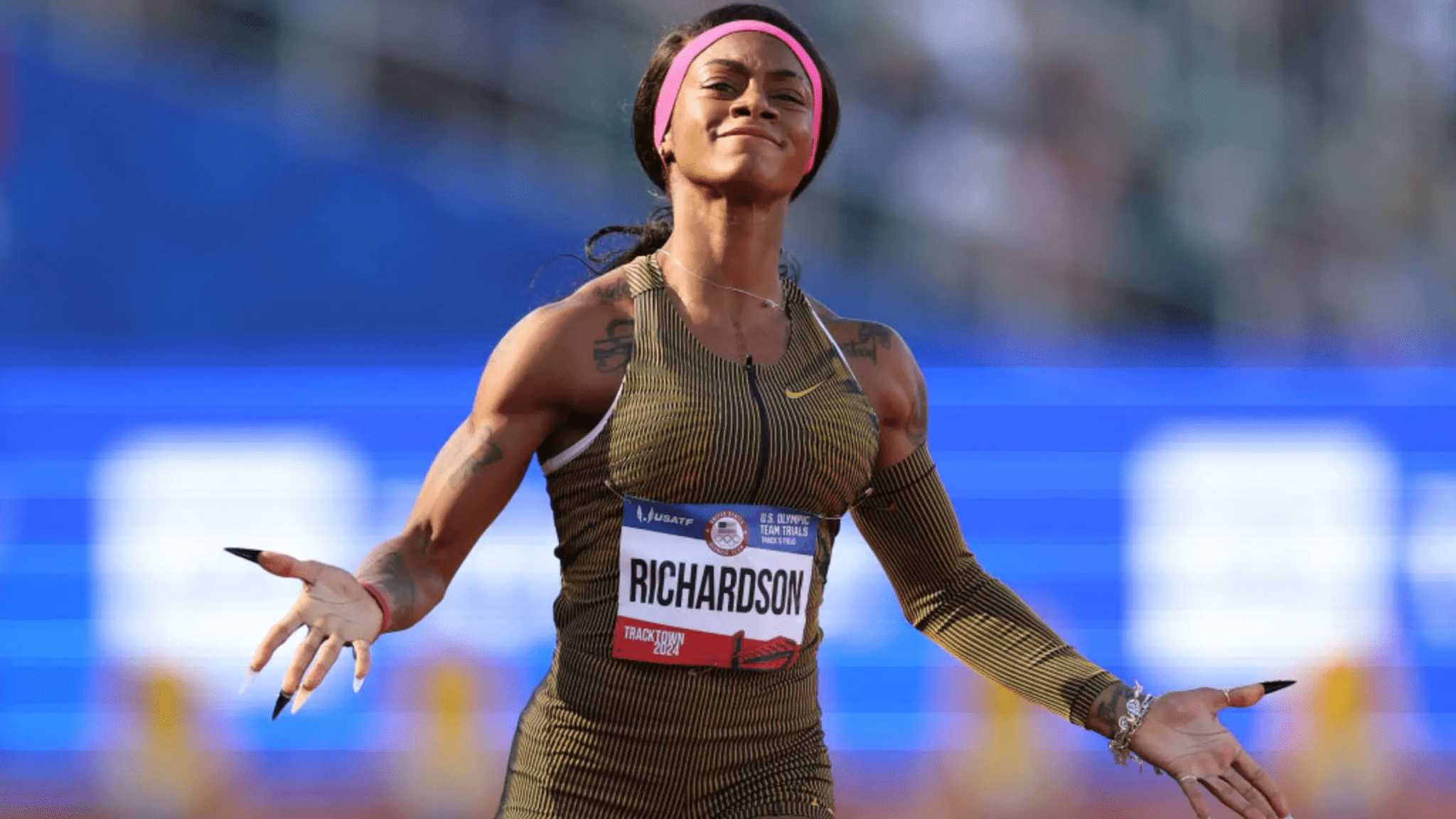
Through the Thorns: “I’m Not Back, I’m Better”
The most difficult moment in her career was 2021, when a positive marijuana test led to her suspension from the Tokyo Olympics. The whole world discussed her fall, but Dallas continued to believe.
Her return in 2023 at the World Championships in Budapest, where she won gold in the 100-meter dash with a time of 10.65 seconds, was a moment of truth. And her success at the Olympic Games 2024 in Paris finally cemented her status as a global icon. As of 2026, she remains the premier face of world athletics.
“I want you to know: I don’t just run. I represent every girl from Dallas who was told she thinks too much of herself.” — Sha’Carri Richardson
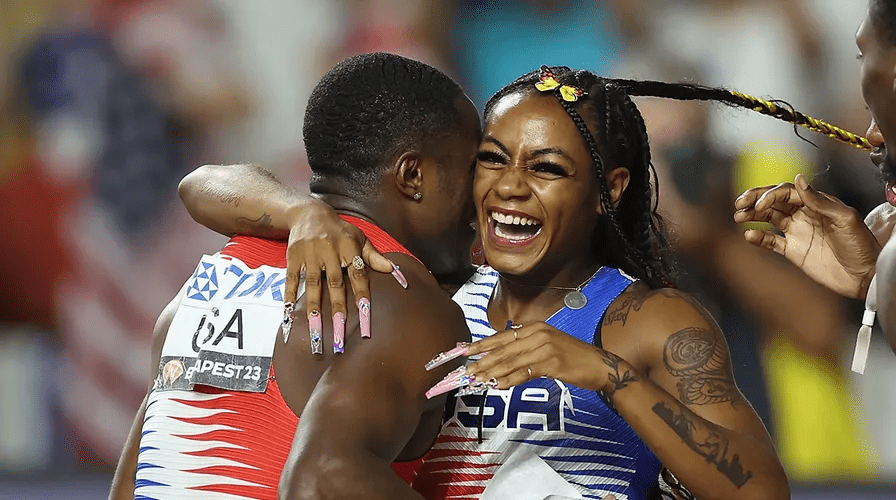
A Legacy That Drives Forward
Sha’Carri is living proof that roots determine the trajectory. Her success on the world stage is a triumph not only of her talent but of the entire South Dallas community. She carries the legacy of Carter High on her shoulders, proving that the “steel core” laid by her grandmother is stronger than any of life’s hardships.
Today, Sha’Carri is Dallas in motion. She showed that you can be a “girl from the neighborhood” and simultaneously the fastest woman on the planet without losing your authenticity. Her story is a reminder that metal is tempered in the hottest spots, and that is precisely where those capable of dictating their rules to the entire world are born.
Sources:
- https://www.britannica.com/biography/Sha-Carri-Richardson
- https://www.runnersworld.com/races-places/a43555007/shacarri-richardson-miramar-invitational/
- https://www.fox4news.com/sports/shacarri-richardson-advances-100m-final
- https://www.qcnews.com/sports/ap-shacarri-richardson-sprints-onto-us-olympic-team-after-winning-100-in-10-71-seconds/