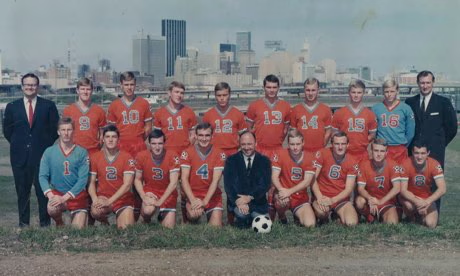

In 1967, professional soccer in the US was in a state of embryonic chaos. While most team owners were trying to figure out how to sell tickets to local stadiums, visionary and billionaire Lamar Hunt decided to act radically. He didn’t just create the Dallas Tornado; he sent them on the strangest, most grueling, and most nonsensical world tour in sports history. It was a mix of football, diplomacy, and pure Texan madness that lasted seven months.
On i-dallas.com, we examine the details of the Dallas team’s global journey:
- How a plan to visit 30 countries in 7 months turned preseason preparation into a test of the limits of human endurance;
- Why European legionnaires were forced to wear massive cowboy hats in the tropical jungles of Asia and at events in Iran;
- Players’ memories of playing in Saigon in 1968 under the roar of artillery and the protection of military helicopters;
- Why Lamar Hunt wasn’t concerned about losses with a score of 0:12, as long as the stands in Calcutta and Tokyo were packed to capacity;
- The role of the “tour of chaos” in creating the NASL league and transforming Dallas into the main forge of US football talent.
Lamar Hunt Searching for Global Glory: Marketing Adventurism
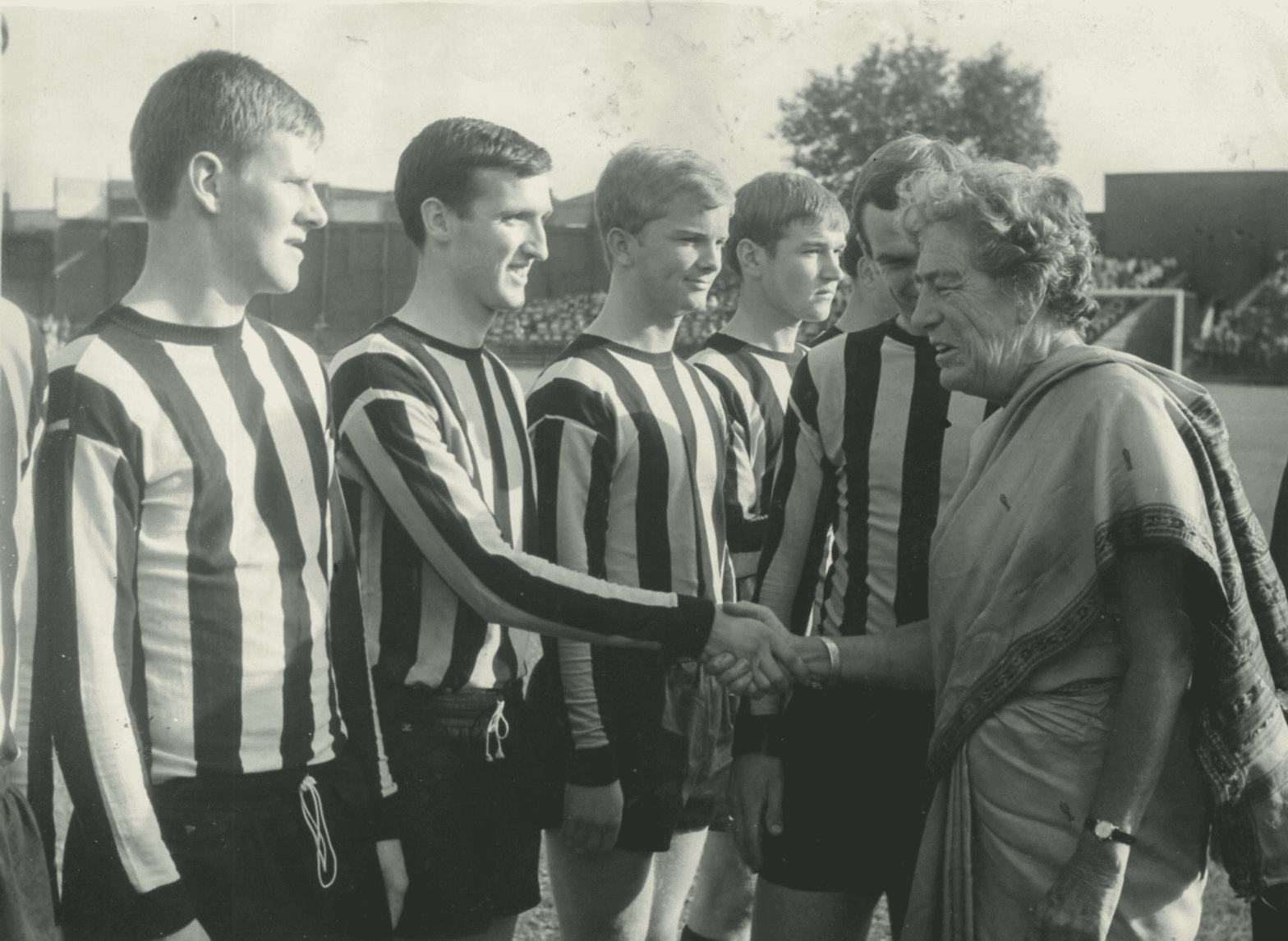
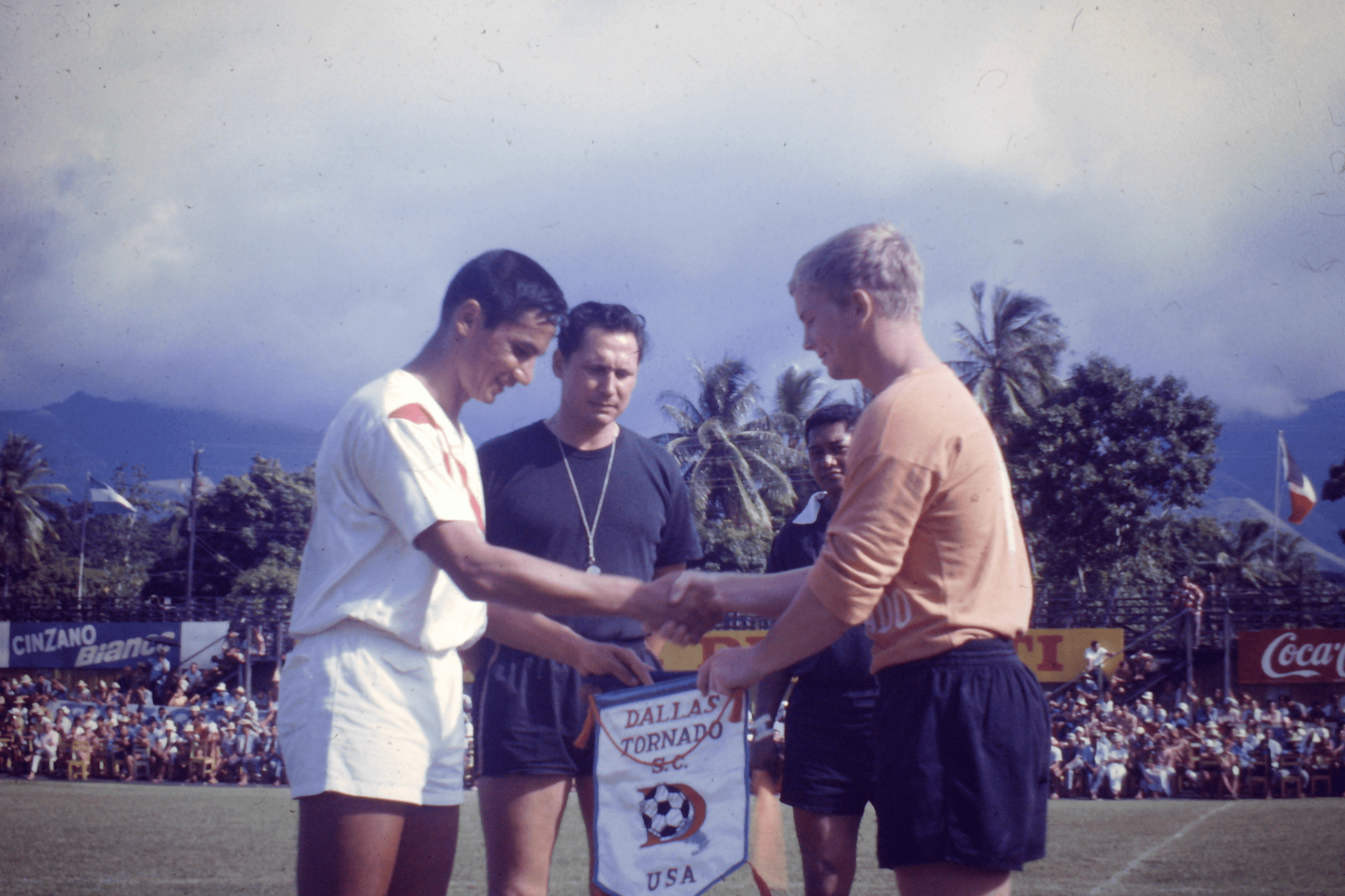
Instead of conducting grueling training on the familiar fields of Texas, the Dallas Tornado team, consisting mostly of foreign legionnaires (Norwegians, English, and Dutch) who had never seen Dallas before, set off on an incredible round-the-world tour. Lamar Hunt’s plan was as ambitious as it was senseless from the standpoint of sports medicine: 30 countries, 5 continents, and almost 50 matches in 7 months.
Hunt wanted the name of his team to be heard everywhere—from the humid jungles of Asia to the cold capitals of Europe. These were not ordinary preseason camps; it was a massive PR campaign where players involuntarily became “ambassadors of Texas,” often having no idea where the next flight would take them.
Diplomacy in Stetson Hats
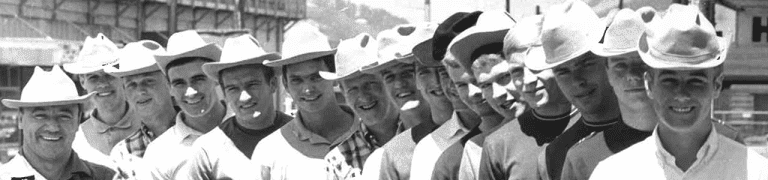
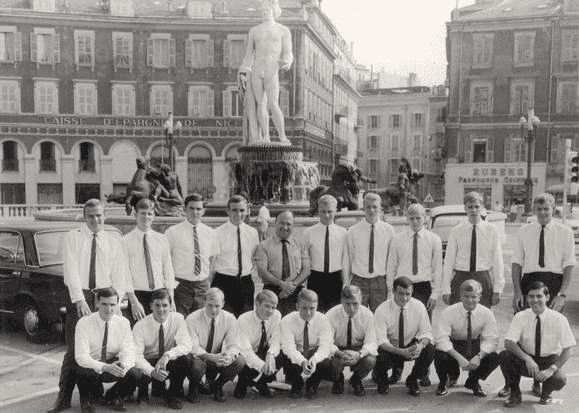
One of the most curious and strict conditions of the contract was the obligation for players to wear signature cowboy hats (Stetsons) and ties during all official travel. Hunt understood the power of visual marketing. In any part of the world, people had to identify the team with Dallas.
- Visual Contrast. Imagine a group of exhausted European athletes stepping off a plane in 104°F heat in India or during a tropical downpour in Singapore, wearing massive felt hats on their heads.
- Crowd Reaction. This accessory caused a mix of surprise and delight. In Tehran and Calcutta, thousands gathered just to look at the “real Texas cowboys” who had come to play soccer.
- Curiosities. Hats were typically lost, got wet, or became objects of theft as souvenirs, but Hunt demanded strict discipline—the Dallas brand had to remain flawless, even if players were on the verge of heatstroke.
Playing on the Edge of Survival
The Dallas Tornado tour passed through zones of real military conflicts and epidemiological risks. Players recalled feeling not like athletes, but like characters in an adventure novel.
- Vietnam Front. In January 1968, the team landed in Saigon in the heat of the war. They played matches in stadiums with military helicopters circling overhead, while the sounds of artillery cannonades in the distance were perceived as a familiar background. Players were accompanied by armed guards, and hotels were surrounded by barbed wire.
- Middle East and Asia. In some countries, the team fell into the epicenter of political unrest. In Turkey and Greece, matches were accompanied by fan aggression, while in India and Pakistan, the main enemy was mass food poisoning and dysentery.
- Endurance Living. Constant malnutrition, overnight economy-class flights, and staying in hotels where beds were often just mattresses on the floor turned the sports tour into a survival test.
Sporting Chaos
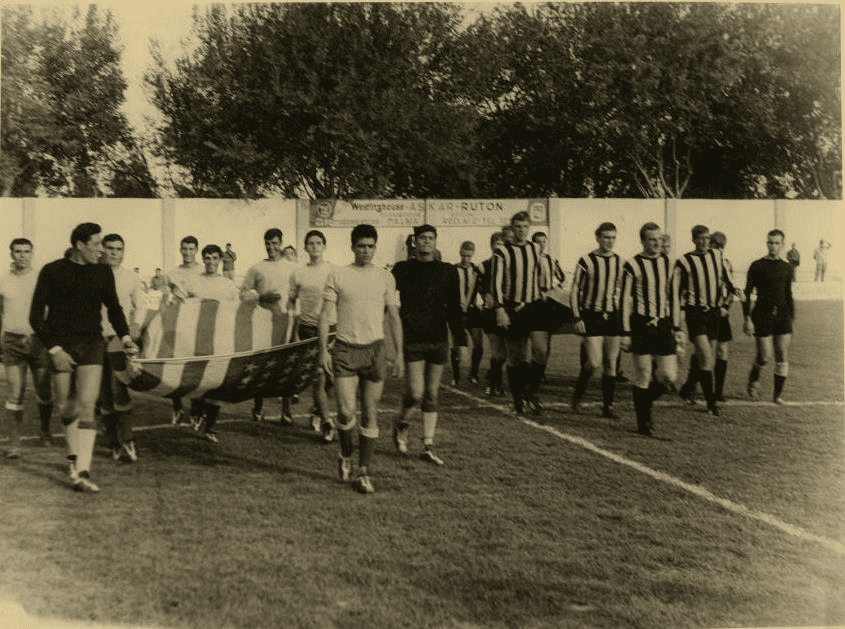
From a purely professional standpoint, the tour was a total disaster. Exhausted players, who could barely stand on their feet due to constant travel, went out against fresh national teams and top clubs.
- Shameful Results. In some matches, the scores were humiliating. For example, a 0:12 defeat to Greek opponents or crushing losses in Iran and Japan. Players recalled that sometimes they simply didn’t have the strength to run for the ball in the second half.
- Hunt’s Philosophy. However, Lamar Hunt cared little about this. For him, a newspaper headline was more important. If 40,000 people in Calcutta came to watch the Dallas Tornado play, the mission was accomplished.
- Advertising the Imaginary. The team advertised the city and soccer where Texas was known only from Wild West movies. Every match became a sensation in the local press, creating the illusion of a powerful American club.
Tour Results
Dallas Tornado returned home exhausted, ill, and demoralized sportingly, but they fulfilled Lamar Hunt’s main task—they made the Dallas brand global. This tour laid the foundation for the future of professional football in the US, showing that through aggressive marketing and “cowboy” persistence, you can interest the world even in a sport that in America itself was considered exotic at the time. Dallas Tornado players became true pioneers who survived chaos so that Dallas would appear on the world soccer map.
Sowing the Storm: Prerequisites for Modern American Soccer
Although most sports experts of the time considered the Dallas Tornado round-the-world trip absolute madness and an example of senseless waste, it was precisely what laid the critical foundation for all American football. Lamar Hunt turned out to be a far-sighted strategist. He used the colossal experience and international connections gained during the trip to develop the NASL (North American Soccer League). This organization would carry out a real revolution in the 70s, bringing world superstars of the first magnitude to the US.
From Survival in the Jungles to the Era of Pelé
The connections Hunt established during matches in Europe and South America later allowed him and his partners to attract legends to American clubs that they couldn’t even dream of before.
- Pelé and Franz Beckenbauer became the faces of the league, gathering full stadiums in New York and California.
- They were joined by geniuses such as Johan Cruyff and George Best.
Dallas Tornado players became real pioneers who proved to skeptics in practice that European football can and should be a successful global business in America. They showed that the American public is ready to consume this spectacle if it is properly packaged and promoted.
Seeds in Concrete: Legacy of the “Exhibits” of Texan Culture
Today’s massive popularity of the MLS and Dallas’s status as one of the country’s main and most stable football centers is a direct, though non-obvious, legacy of that very “tour of chaos” in 1967.
Those exhausted, dehydrated players in Stetsons, who took the field to the sounds of bombings in Saigon and risked their lives in conditions of cholera and dysentery in Asia, were the first to sow the seeds of professional football. They did so on true American soil. They endured discomfort, acting more as “living exhibits” of Texan culture than athletes. However, without their desperate readiness to endure this chaos, modern soccer in the US and Dallas’s sports culture today might look entirely unique.
Continuity of Football Faith
Lamar Hunt’s legacy didn’t just stay in history books. It transformed into a modern reality. When the modern MLS began to form in the early 90s, it was the Hunt family who became its main engine, founding the club we know today as FC Dallas.
- Stadium as a Symbol. Unlike in 1967, modern FC Dallas has its own high-tech home in Frisco—Toyota Stadium.
- Talent Academy. Hunt’s philosophy of sports development has grown into one of the best football academies in the US. Today, Dallas no longer imports tired Europeans but instead—raises its stars.
- National Hall of Fame. Symbolically, it is in Dallas that the US National Soccer Hall of Fame is located, which once again emphasizes the city’s status as the cradle of American football.
The Hunt dynasty proved that long-term investments and faith in an idea can turn an exotic pastime into a religion for millions.
Triumph of Strategic Madness
The history of the Dallas Tornado is a perfect illustration of the Texan approach to business: if a market doesn’t exist, it must be created by force, charisma, and aggressive marketing. What looked like total chaos, organizational hell, and sporting humiliation with blowout scores in the late 60s turned out to be a brilliant strategic move decades later. Lamar Hunt and his “soccer cowboys” proved that for great achievements, you sometimes need to step outside your comfort zone, put on a hat, and play a match where no one expects you. They lost many battles on that tour, but they won the main war—the war for America’s football future.
Sources:
- https://www.theguardian.com/sport/blog/2014/jan/09/forgotten-story-of-dallas-tornado
- https://www.fcdallas.com/news/50-years-later-story-dallas-tornados-infamous-world-tour-1967
- https://exhibits.library.unt.edu/dallas-tornado-soccer/
- https://www.nasljerseys.com/Misc/Tornado%2067-68%20World%20Tour2.htm