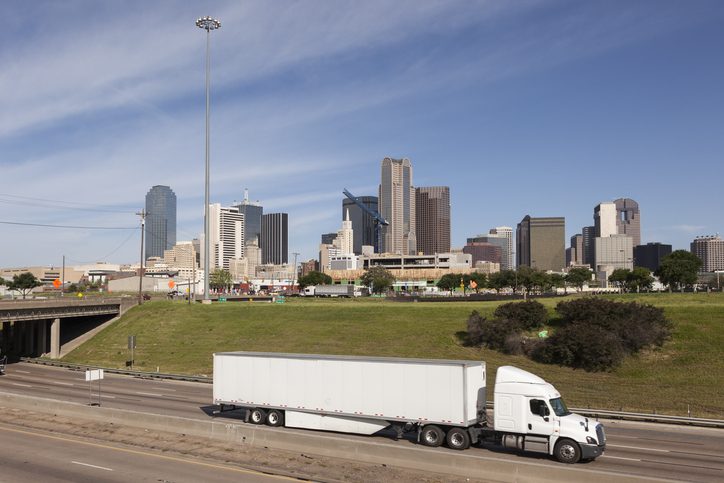

Dallas—the largest inland port in the United States and a strategic crossroads of the I-35 highway—suffered for years from the flip side of its success. Thousands of diesel trucks “choked” the city with smog. However, the emergence of Tiffany Derby in the Texas logistics sector changed the rules of the game by 180 degrees. She demolished the myth that ecology is expensive and proved that CleanTech logistics is a mathematically precise formula for super-profits.
In this article on i-dallas.com, we reveal the details of Tiffany Derby’s technological revolution:
- how AI-based intelligent routing reduced empty truck miles by 30%;
- why “green corridors” and hydrogen hubs became a real death sentence for the diesel era in Texas;
- the “last mile” electrification strategy and its impact on the ecology of Downtown Dallas;
- how to transform ordinary warehouses into autonomous power plants using solar generation;
- the role of IoT sensors in creating transparent supply chains and real-time emissions monitoring;
- Derby’s social elevator: how truck drivers are becoming specialists in the new “green” economy;
- a vision of the future: creating a “digital twin” of the metropolitan transport system.
The Architect of Green Supply Chains
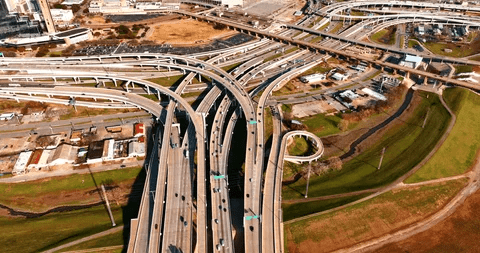
Tiffany Derby entered the Dallas logistics sector at a critical moment when the metropolis, being the largest inland port in the USA, was literally suffocating from the emissions of thousands of rigs that daily crossed the strategic I-35 node. Her fundamental idea overturned the perceptions of the conservative market. Derby proved that sustainable logistics is not social charity or a tribute to fashion but a mathematically grounded model of ultra-high efficiency.
- Intelligent Routing. She became a pioneer in implementing complex artificial intelligence algorithms for dynamic traffic optimization. This allowed for a systematic solution to the problem of “empty runs,” reducing them by 30%. Every mile that a truck did not travel without a load is a direct fuel saving and a radical reduction in the load on the city’s road infrastructure.
- Direct Correlation of Ecology and Profit. Derby’s approach is based on ironclad logic: reducing the carbon footprint directly increases business margins. Lower energy and fuel consumption automatically mean lower transportation expenses. Her strategy rests on three “pillars”:
- Data transparency: end-to-end monitoring of every stage of supply in real-time.
- Fleet electrification: a gradual transition to long-haul electric trucks and hydrogen transport for long-distance trips.
- Packaging cyclicity: the total exclusion of single-use plastic and the transition to reusable intelligent containers, which minimizes waste in warehouses.
- Hub Transformation. Thanks to Derby’s efforts, Dallas began a rapid metamorphosis. The city stopped being just a transit point on the map, turning into an intellectual center of clean technologies. Here, every liter of saved diesel or every kilowatt-hour of clean energy is considered a strategic investment in the future of the community and the health of the region’s residents.
Today, Tiffany Derby actively promotes the concept of “green corridors,” where logistics centers operate on renewable energy and cargo flows are managed by neural networks. Her work has created a new standard for the industry. Now, a successful logistics company in Texas is one that knows how to calculate not only profits but also its environmental impact.
Under her influence, Dallas has become a testing ground for autonomous electric trucks, which has finally secured the city’s status as a laboratory of the future. Tiffany proved to save the ecology of a big city; you don’t need to stop the movement—you need to make this movement flawlessly precise and digital.
Technological Breakthrough: From Diesel to Water Vapor
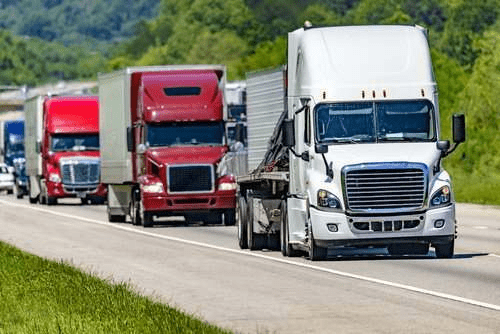
One of Tiffany’s loudest and most strategically important achievements was her lobbying and organizational work on the implementation of hydrogen fuel cells in the heavy long-haul equipment segment. Understanding the limitations of battery technologies for long-distance transportation, she initiated the creation, in partnership with Texas energy startups, of the first network of hydrogen refueling stations (H2-Hubs) for trucks in North Texas. This became a turning point that allowed large logistics corporations to begin a real rejection of diesel engines in favor of zero-emission systems, where the only product of combustion is pure water vapor.
Key Stages of Modernization According to the Derby Strategy
Electrification of the “last mile.” Radical replacement of courier vans and medium-duty trucks with electric cars within the dense development of Downtown Dallas. This allowed not only for cleaning the air in the city center but also for significantly reducing noise pollution levels, making the urban environment more comfortable for residents.
- Total IoT integration. Implementation of a network of intelligent sensors that monitor in real time not only geolocation but also the state of the cargo (temperature, humidity) and the exact volume of emissions of each vehicle. Such data allows for immediate route correction in case of congestion, avoiding unnecessary engine idling.
- Smart warehouses. Transformation of warehouse terminals into fully autonomous energy facilities. Thanks to the installation of powerful arrays of solar panels on the roofs of hangars and energy storage systems. Dallas logistics hubs have become not only energy independent but also capable of returning surplus electricity to the city grid during peak load hours.
These consistent steps have brought Tiffany Derby to the status of an undisputed thought leader in the CleanTech field. Her analytical conclusions and advice are listened to today by both Dallas municipal advisors when planning transport interchanges and the owners of multi-million dollar industrial parks. She proved that the ecological transformation of logistics is not the future but a working reality that makes Texas the main testing ground for technologies that will change world trade.
Social Impact and the New Ethics of Corporate Culture
Tiffany Derby has always emphasized a fundamental principle: any technology without people’s involvement is just “dead iron.” Realizing the challenges posed by the fourth industrial revolution, she developed and implemented unique retraining programs for truck drivers, dispatchers, and warehouse complex operators. Her strategy allowed not only for the preservation of jobs in conditions of total automation but also for providing employees with scarce skills for professional growth within the new “green” economy.
Main Directions of Educational and Social Activity
- Eco-driving workshops. Specialized trainings that teach drivers the most efficient management of equipment. This not only reduces energy and fuel consumption but also significantly reduces the wear and tear of braking systems and engines, extending the life of the fleet.
- Scholarship fund for women in STEM. Foundation of grant programs for women who strive to build a career in the technical and engineering aspects of logistics. Derby actively breaks gender stereotypes in the industry, attracting new talents to the development of complex transport systems.
- Public diplomacy and myth-busting. Tiffany is a constant speaker at the largest Dallas business forums. Her speeches are aimed at overcoming skepticism regarding the cost of environmental solutions. She operates with figures, proving that the “green” path is the shortest path to a company’s financial stability.
Thanks to Tiffany Derby’s systematic efforts, the concept of corporate social responsibility in Texas has stopped being a formal line in an annual report for the sake of a rating. She turned it into a real mechanism of a “social elevator,” where every employee has a chance to become part of technological progress.
Therefore, now the Dallas logistics sector is perceived not as a source of pollution, but as a platform for environmental protection and social innovation. Derby’s work has created a precedent where the success of big business is inextricably linked with the welfare of the community and the preservation of the environment. This lays the foundation for the harmonious development of the metropolis for decades to come.
The Future of Intelligent Transport Corridors
Today, Tiffany Derby is working on the concept of a “digital twin” of the Dallas transport system. This allows for predicting traffic jams and adjusting the movement of ecological transport even before problems arise on the roads. Her vision of the future is a silent city where logistics works like a perfect Swiss watch, leaving nothing behind but clean air.
She actively cooperates with the city authorities on the creation of special low-emission zones, where only certified CleanTech transport will have access. This stimulates businesses to modernize faster, creating a competitive advantage for those who choose the path of sustainable development. Dallas, under the influence of Derby’s ideas, is becoming a role model for the entire South of the USA, proving that industrial power and ecology can be partners, not enemies.