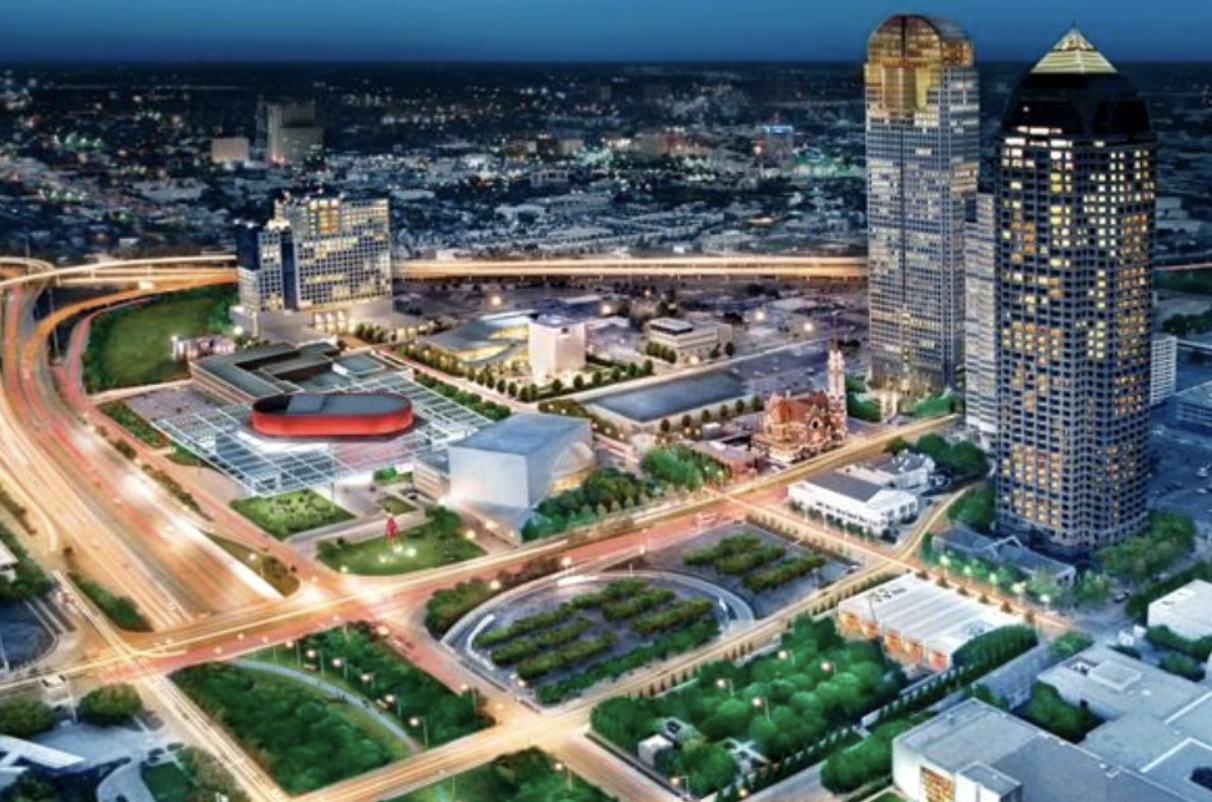

When we think of America’s cultural epicenters, places like New York’s Lincoln Center or Washington D.C.’s Museum Mile usually come to mind. Yet, the largest contiguous urban arts district in the United States is actually in Texas—the famous Dallas Arts District. Spanning nearly 120 acres, this neighborhood boasts architectural masterpieces designed by multiple Pritzker Architecture Prize laureates (the Nobel Prize of the architectural world). But behind this polished facade of glass and concrete lies a complex story of battles over urban space, daring engineering feats, and a few secrets that tour guides rarely mention. Read more on i-dallas.com.
From Oil Wasteland to Cultural Hub
Today’s Dallas Arts District didn’t happen by accident. It is the result of pure urban pragmatism and clear, long-term planning. In the bleak 1970s, the city’s business district died the second the clock struck five. Thousands of office workers headed home to the cozy, green suburbs, leaving the towering glass-and-steel corridors of downtown deserted and increasingly unsafe.
At the same time, the city’s leading museums, art galleries, and theaters were cramped in outdated spaces at the historic Fair Park, desperately needing room to grow.
Edward Barnes’s Revolutionary Architectural Strategy
In 1977, forward-thinking city officials partnered with major Texas business leaders to make a bold move. They hired renowned urbanist Edward Larrabee Barnes to design a brand-new master plan for the area. His vision was completely revolutionary—and highly unusual for car-centric Texas.
Transforming empty oil-drilling lots into a state-of-the-art mega-district relied on several strategic steps:
- Maximum concentration of institutions: Instead of scattering cultural spaces across a massive, sprawling city, planners chose to pack them into a single, dense, integrated district.
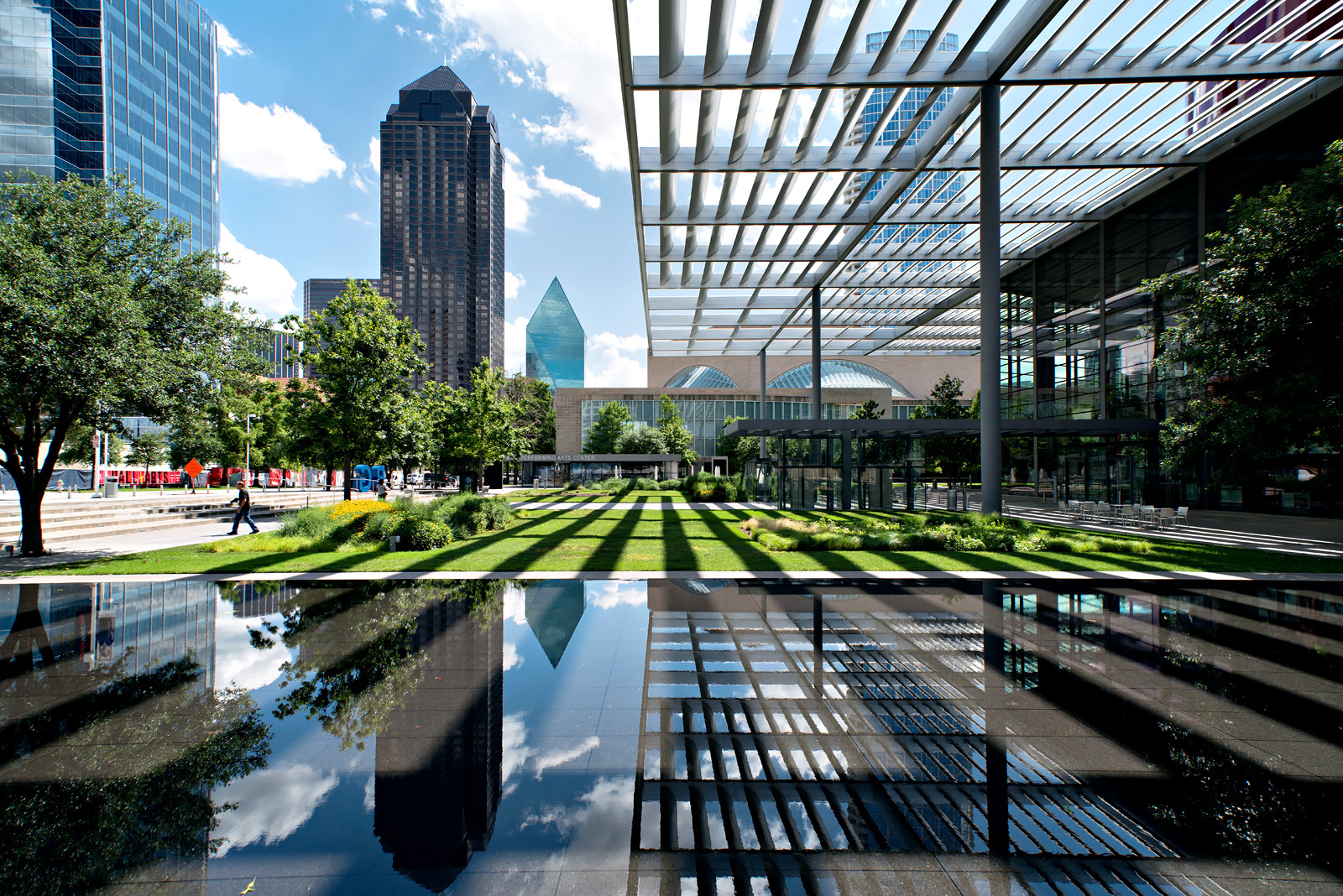
- A pedestrian-first approach: Creating an environment where visitors could comfortably park once and walk easily between the opera house, a museum, or the symphony hall.
- Leveraging private capital: Booming oil profits and the deep pockets of local magnates funded massive investments, while world-renowned architects brought creative courage and futuristic designs.
- Blending genres and spaces: Integrating exhibition halls, green lawns, outdoor summer stages, and cozy dining options into a single architectural ecosystem that stays active seven days a week.
A Global Model of Smart Urbanism
By executing this ambitious plan, Dallas built the largest contiguous urban arts district in the United States, known as the Arts District. The project didn’t just save museums from a lack of physical space; it completely revitalized the social fabric of Downtown Dallas, bringing people and vibrant energy back to the city center.
Today, this massive cultural hub is proof that even an industrial boomtown built on oil rigs and banking capital can transform financial power into high art, creating a walkable, human-scaled, and inspiring environment for millions of residents.
Transformer Theaters and Acoustic Sorcery
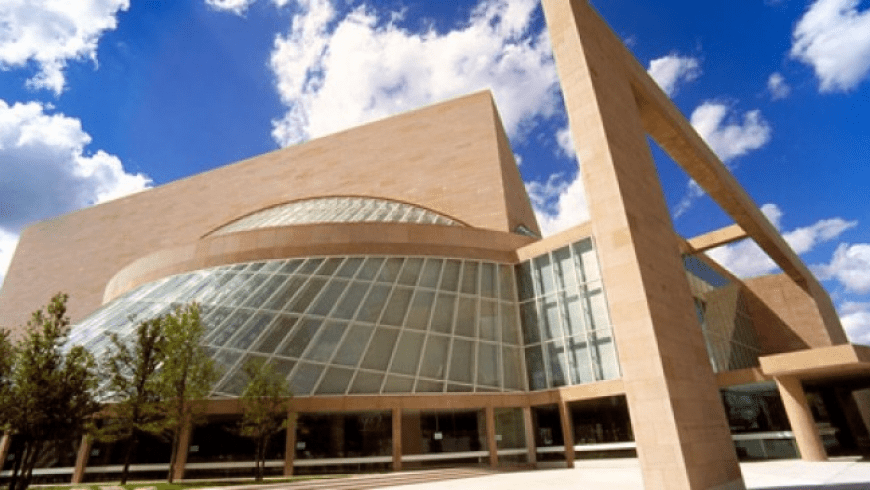
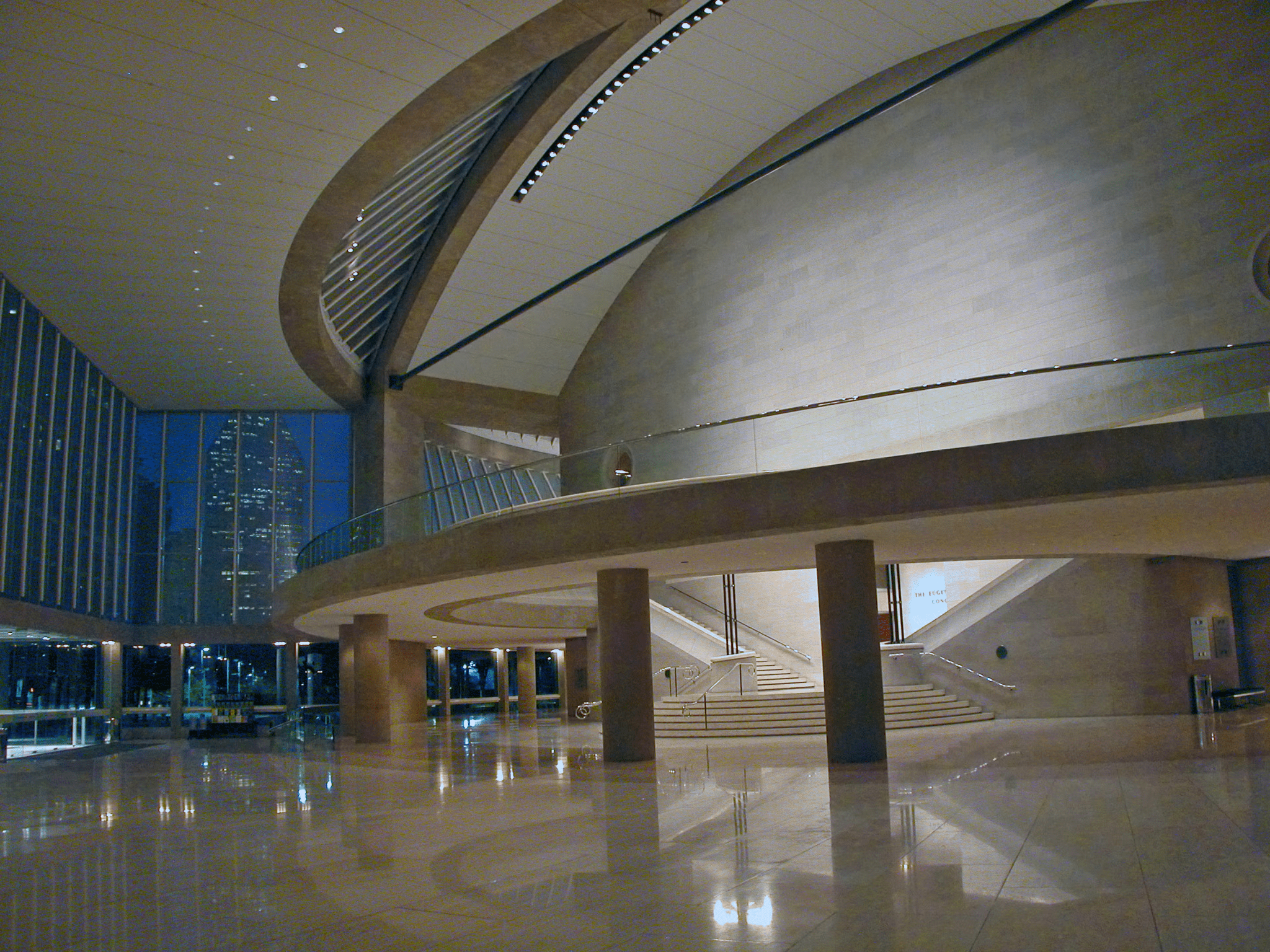
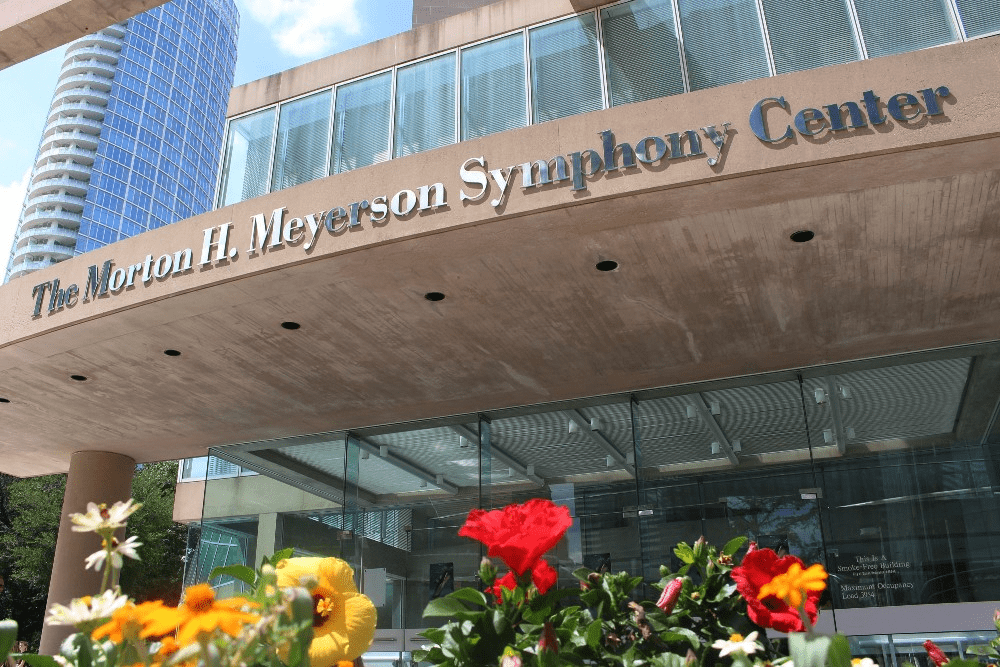
Every building here challenges traditional architecture. For example, the Meyerson Symphony Center, designed by the legendary I.M. Pei (architect of the Louvre Pyramid), looks like a collision of sharp geometric cubes and fluid glass waves on the outside. Inside, however, Pei created a massive acoustic instrument. The hall features 74 concrete chamber doors weighing over two tons each, which open and close via computer to adjust the room’s volume depending on whether a small ensemble or a massive orchestra led by a guest star is performing.
Next door is the Winspear Opera House, designed by Norman Foster’s firm. It represents a total reimagining of the classic opera house.
Foster’s team pushed the lobby beyond traditional walls, wrapping it under a soaring glass canopy that shields visitors from the Texas heat with a massive solar shade. The heart of the building is a vibrant red glass drum that glows at night, creating a dramatic contrast with the surrounding urban landscape.
But the most extreme technological leap came from Rem Koolhaas with the design of the Wyly Theatre. Traditional theaters are organized horizontally—lobby first, then the auditorium, stage, and backstage. Facing a tight footprint, Koolhaas stacked these elements vertically, creating the world’s first vertical theater. Here, back-of-house facilities and dressing rooms are located underground or on upper levels, and the performance space is surrounded by ultra-strong glass instead of brick walls. During a show, audiences can look out at the city lights if the director wishes, or the space can be completely enclosed with blackout panels in a matter of minutes.
The District’s Best-Kept Engineering Secrets
Look closely, and you’ll realize the innovation here runs deeper than striking rooflines and colored glass. The entire district operates as a single, interconnected ecosystem. Here are a few details that usually fly under the radar of average passersby:
- An underground museum: The Dallas Museum of Art is designed to avoid looming over the street. Architect Edward Larrabee Barnes deliberately kept the building low, focusing the main galleries around quiet interior courtyards. Most of the vault storage and technical areas are tucked underground to keep the surface pedestrian-friendly.
- Renzo Piano’s light trap: The Nasher Sculpture Center features a unique glass roof. Italian architect Renzo Piano engineered floating aluminum sunscreens that act as “light traps.” They filter only soft, indirect northern light into the galleries while blocking the brutal, direct Texas sun that could damage masterpieces by Rodin or Giacometti.
- A park over a highway: For years, the arts district was cut off from the residential neighborhoods of Uptown by the deep concrete trench of the Woodall Rodgers Freeway. In 2012, engineers solved this by building the 7.4-acre Klyde Warren Park directly *above* the busy freeway. This engineering bridge became a green gateway, finally stitching the divided city back together.
Building a space like this is more than just a flex by star architects. It is a proof of concept showing that even in a city engineered entirely around cars, you can create a pedestrian oasis where architecture successfully slows down the pace of life.
Climate Engineering: How the Arts District Beats the Texas Heat
Beyond its obvious cultural and architectural accolades, the Dallas Arts District serves as a massive laboratory for green urban planning. Designing monumental structures in the middle of a concrete jungle forced engineers to solve a critical issue: protecting visitors from extreme Texas summer heat without overloading municipal AC grids. The solution lay in creating a custom microclimate using physics and clever landscape architecture.
Keeping pedestrian plazas comfortable on hot summer days relies on several innovative design hacks:
- Aerodynamic wind corridors: Staggering the skyscrapers and museum structures in a checkerboard pattern catches prevailing wind currents and funnels them down to pedestrian paths, providing constant natural ventilation.
- Hydrothermal cooling fountains: A network of interactive water features and reflecting pools uses active evaporation to lower ambient air temperatures by 5 to 7 degrees Fahrenheit during peak summer hours.
- “Living” permeable pavement: Swapping dark asphalt for highly reflective, light-colored permeable stone tiles prevents solar heat accumulation, eliminating the “hot skillet” effect underfoot.
- Layered tree canopies: Planting resilient, broad-leafed trees along Flora Street creates a dense natural canopy that shields pedestrians from intense ultraviolet rays.
Thanks to these hidden climate solutions, the Arts District became Texas’s first true pedestrian oasis, keeping temperatures in the neighborhood noticeably cooler than on adjacent downtown traffic arteries. This engineering success proves that deliberate design can tame even the harshest climates, turning a walk between museums into a pleasant and safe experience under the southern sun.
Democratizing Public Space
Today, this urban experiment continues to evolve. The main challenge now is not constructing new walls, but bringing casual, democratic street life into a space originally designed to feel somewhat elite.
That is why food trucks, free concerts by local bands, and night markets are increasingly popping up in the plazas between museums. The architecture has done its job—it set up a strong, highly functional stage. Now, it’s up to the community to bring these towering glass incubators of culture to life.