
Today, Dallas is proving to the world that a metropolis can be more than just a consumer—it can be an effective ecosystem where waste becomes a valuable resource. From a massive energy hub at the site of the McCommas Bluff landfill to mobile concrete recycling plants in the city center, Texas is setting new standards for the circular economy. This is the story of how engineering, private capital, and community initiative are creating a zero-waste future.
In this article on i-dallas.com, you will learn:
- How the region’s largest landfill, McCommas Bluff, provides heat to thousands of North Texas homes;
- How the company Ojo de Sol turns debris from old warehouses into the foundation for new skyscrapers;
- Why vermicomposting and urban farms have become the key to a thriving restaurant business;
- How the municipal CECAP plan and IoT technologies are helping Dallas become a carbon-neutral metropolis.

The Energy Rebirth of the McCommas Bluff Landfill
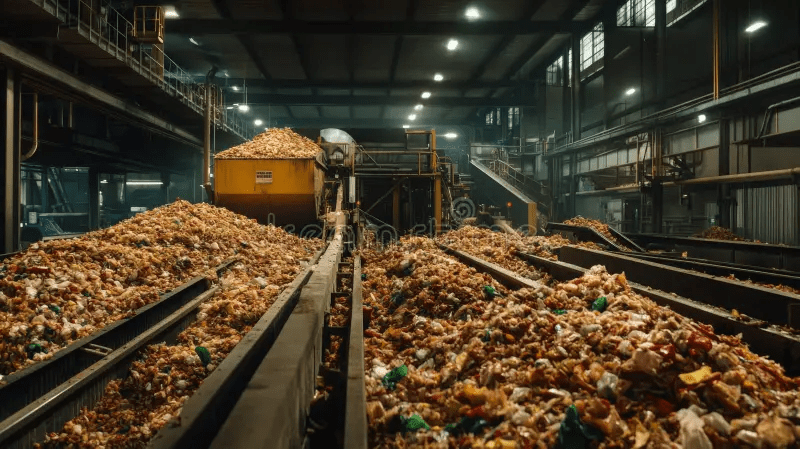
The McCommas Bluff Landfill, ranked among the largest such facilities in the United States, is undergoing a striking transformation. It has evolved from a potential environmental liability into a high-tech energy station. Rather than simply accumulating millions of tons of plastic and organic matter, the facility utilizes one of the world’s most advanced landfill gas collection and processing systems. This turns the disposal problem into a stable source of clean energy for the entire metropolis.
Through a strategic partnership between the municipality and private energy companies, methane, which is naturally produced by the decomposition of organic waste, no longer escapes into the atmosphere. The gas is collected through an extensive network of wells, undergoes multi-stage purification, and is directed straight into the city’s natural gas pipeline network. This approach allows for a steady supply of heating and electricity to thousands of North Texas households, making the region less dependent on traditional fossil fuels.
- Direct Methane Conversion. The technology captures a harmful gas that is 25 times more potent for the climate than carbon dioxide and converts it into useful fuel. This provides a dual benefit: air purification and energy generation.
- Carbon Footprint Reduction. The project allows for the reduction of greenhouse gas emissions by hundreds of thousands of tons annually. This is equivalent to taking tens of thousands of internal combustion engine vehicles off the road, significantly improving Dallas’s environmental background.
- Budgetary Financial Stability. The sale of renewable gas creates a constant source of revenue for the city treasury. The funds received are reinvested into social initiatives and the further modernization of waste management infrastructure.
- High-Tech Sector Jobs. The operation of complex filtration and monitoring systems requires skilled engineers and IT specialists. This stimulates the labor market in the field of “green” technologies and attracts young professionals to solve environmental challenges.

Revolution in Construction and Recycled Materials
In the construction material recycling sector, Dallas has become a stage for bold and successful experiments that are fundamentally changing the perception of building demolition. Local innovators are actively implementing methods to create high-quality recycled materials directly from industrial demolition waste. This allows the metropolis not only to relieve city landfills but also to significantly reduce the cost of new construction by using recycled resources.
Ojo de Sol Case Study: Circular Economy in Action
The activities of Ojo de Sol have become a benchmark for a responsible approach to urban renovation. When old, abandoned warehouses in areas undergoing gentrification are demolished, concrete and brick are no longer viewed as construction debris to be hauled away. The recycling process is integrated directly into the demolition site, minimizing transportation expenses and carbon emissions.
- Mobile On-Site Recycling. The use of advanced mobile units allows for the crushing of concrete structures and brickwork immediately after demolition. The resulting recycled aggregate (gravel and sand) possesses high performance characteristics and is instantly returned to economic circulation.
- Infrastructural Application. Recycled materials are used as a sturdy base for laying new roads or as a key component in manufacturing modern eco-blocks. This creates a closed loop where old buildings literally become the foundation for new urban projects.
- Reclaimed Wood Aesthetics. A separate branch involves salvaging valuable timber from old Texas farms and warehouses. The company actively uses these materials to create exclusive designer furniture. This preserves natural resources and gives every board a second life, retaining its unique texture and historical charm.
By implementing such technologies, Dallas demonstrates that the construction industry can be environmentally neutral and economically profitable at the same time. The use of recycled materials stimulates the growth of the green innovation market and attracts investment from companies focused on sustainable development. Thus, demolition ceases to be destruction and becomes a process of extracting valuable resources from within the city itself.
This approach also fosters a new culture of consumption among residents and developers. Choosing reclaimed materials becomes a mark of prestige and a conscious stance. Since every ton of recycled concrete saves natural gravel and sand, Dallas is confidently moving toward its status as a zero-waste city.

Composting as a Social and Agricultural Tool
The problem of food waste in a large city is always acute, yet Dallas eco-innovators have found an elegant and effective solution through an extensive network of urban farms. Organizations like Turn Compost offer residents and prestigious restaurants a convenient organic collection system that is radically changing the urban landscape. Through these efforts, Dallas is gradually forming a true culture of zero waste, where every citizen realizes their contribution to the global environmental stability of the entire region.
Vermicomposting and Biological Regeneration
One of the most technological yet natural aspects of the initiative is the mass implementation of vermicomposting. This is the process of using specific types of worms to rapidly process organic remains into high-grade bio-fertilizers.
- High Nutrient Concentration. The resulting vermicompost significantly surpasses regular compost in micronutrient content, which is vital for depleted urban soils.
- Absence of Pathogens. Natural processing eliminates harmful bacteria without the use of chemicals, making the final product safe for growing food crops.
- Growth Stimulation. Using such fertilizers in Dallas’s community gardens allows for harvests that match the quality of the best farming estates in the state.
Local Logistics and the Revival of Community Gardens
A vital component of the project is the optimization of logistics chains. Instead of hauling organic matter to distant landfills, it is processed as close as possible to the collection point. Food scraps from residential blocks and office centers are turned into humus, which is immediately returned to local community gardens.
This model significantly reduces transportation expenses and carbon dioxide emissions. The community sees a real result of its efforts: a bucket of scraps handed over today returns a few months later as lush flowerbeds or fresh greens in the neighboring square. Consequently, composting becomes more than just a duty; it becomes an act of voluntary investment in the aesthetics of one’s own neighborhood.
Circular Economy in the Restaurant Business
The most striking example of the initiative’s effectiveness is the involvement of the city’s restaurant sector. Dining establishments become full participants in the circular economy, closing the loop of production and consumption.
- Buy-Back System. Restaurants collect organics, hand them over for processing, and later purchase fresh vegetables and herbs grown using their waste.
- Economic Benefit. Reducing waste disposal costs and establishing direct contracts with urban farmers allow establishments to optimize their expenditures.
- Marketing Advantage. Zero Waste status attracts conscious consumers, positively affecting the brand image and profitability of the business.
Through this system, Dallas proves that environmental challenges can be turned into points of economic growth. Interaction between restaurateurs, farmers, and residents strengthens social bonds and forms a responsible community ready for future challenges. This transforms ordinary waste sorting into a powerful agricultural tool that brings life back into the city’s industrial quarters.
Municipal Strategies and the Future of the Ecosystem
Dallas authorities actively support eco-innovators through grant programs and tax incentives for “green” businesses. The Comprehensive Environmental & Climate Action Plan (CECAP) aims for total carbon neutrality by 2050.
Importantly, the city is investing in infrastructure for the collection and sorting of recycled materials. The use of Internet of Things (IoT) sensors in waste bins allows for the optimization of collection routes, reducing fuel consumption. This synergy of municipal management, private capital, and community initiatives turns Dallas into a laboratory of the future. The city’s experience shows that transitioning to a circular economy is not just an ethical choice but a strategic necessity.
The success of McCommas Bluff proves that even the least attractive aspects of urbanization, under proper management, become valuable renewable resources. Every ton of waste is now viewed not as trash but as a potential energy carrier capable of benefiting the community for decades. This forms a new philosophy of urban management where the circular economy becomes the foundation of life in a major city.
Beyond the purely energetic effect, the project has become a model for other U.S. cities, demonstrating the possibility of harmonious coexistence between industrial sites and residential areas. Minimizing unpleasant odors and maintaining strict emission controls have made McCommas Bluff one of the cleanest facilities of its kind in the world.
Sources:
- https://www.wfaa.com/article/news/dallas-to-open-temporary-trash-site-after-storms/287-d4c8dca6-ade0-49a3-8b27-bdde8842ddae
- https://www.dallasnews.com/news/2012/08/30/auditor-problems-at-dallas-dump-likely-cost-at-least-1-1-million/
- https://www.facebook.com/groups/2702522049803204/posts/8902985259756821/
- https://www.fox4news.com/news/dallas-recycling-contaminants