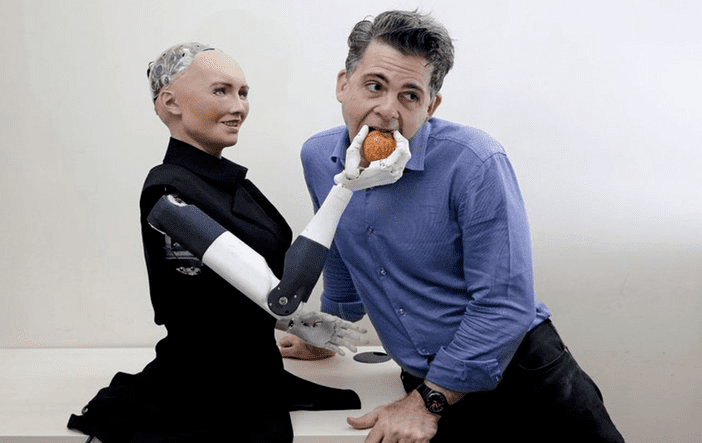

Many interesting things are said about David Hanson: some don’t hesitate to publish sensational headlines suggesting he’s playing God, while others credit him with extraordinary success as an inventor. Continue reading on i-dallas.
David Hanson builds robots. The fruits of his meticulous work include the world-renowned Sophia and Einstein. As CEO of Hanson Robotics, he has devoted his life to developing machines that can surpass human beings and their intelligence.
What We Know About the Inventor
David Hanson was born on December 20, 1969, in Dallas. While attending Highland Park High School, he focused on studying mathematics and the natural sciences. He also loved drawing and reading. He was particularly drawn to the science fiction works of Isaac Asimov and Philip K. Dick.
He earned his degree in Interactive Arts and Engineering from the University of Texas in Dallas. He also completed a Bachelor of Fine Arts at the School of Design, Film, Animation, and Video.
His first robot project came during his student years. In 1995, he created a humanoid head that could be controlled remotely.
The World’s First Robot Citizen: Sophia and Others
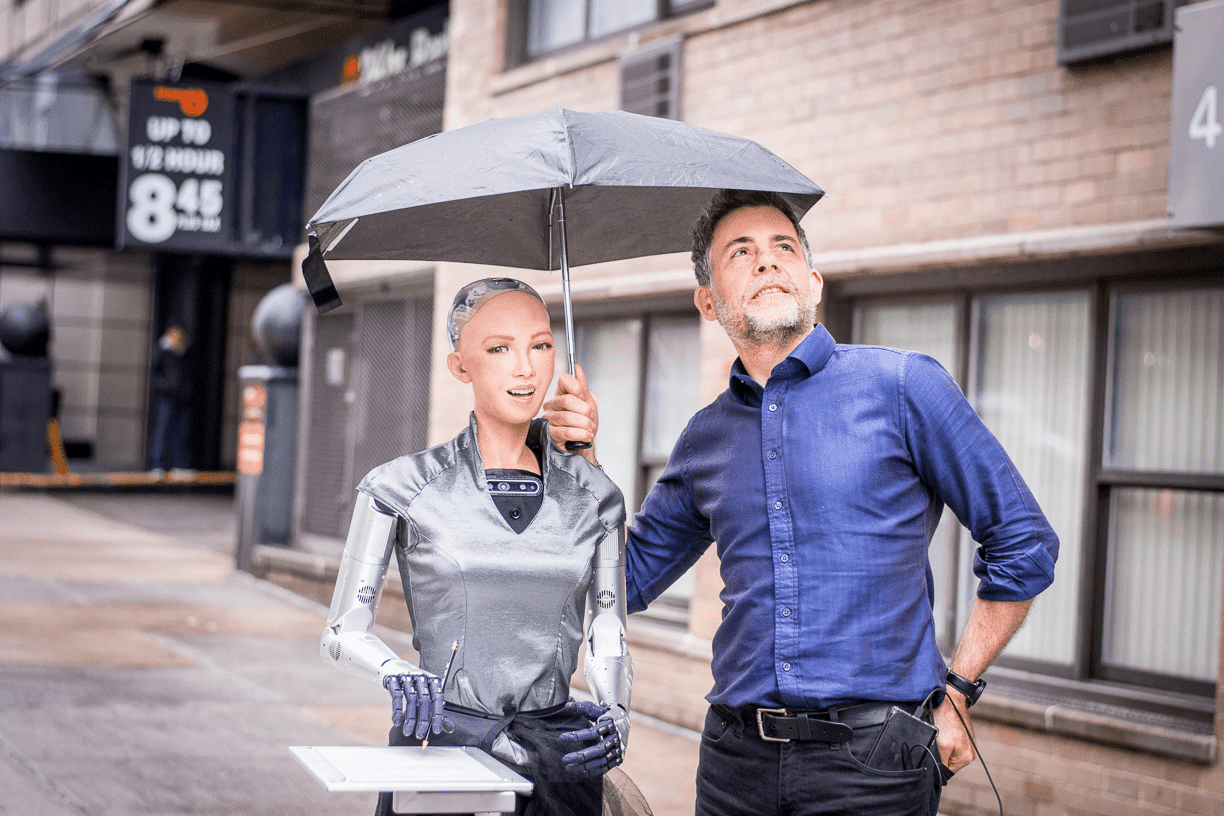
Hanson’s incredible inventions—humanlike robots—have brought him worldwide fame. Each creation closely resembles a real person. For example, Sophia—the world’s first robot citizen—was modeled on actress Audrey Hepburn. Hanson captured every detail: the slender nose, flawless skin, high cheekbones, and bright eyes.
Sophia has become a part of society. She travels internationally, gives interviews, and speaks before audiences. Most amazingly, Sophia doesn’t just recite lines. She engages in constructive dialogue, knowing when to joke and when to express sympathy.
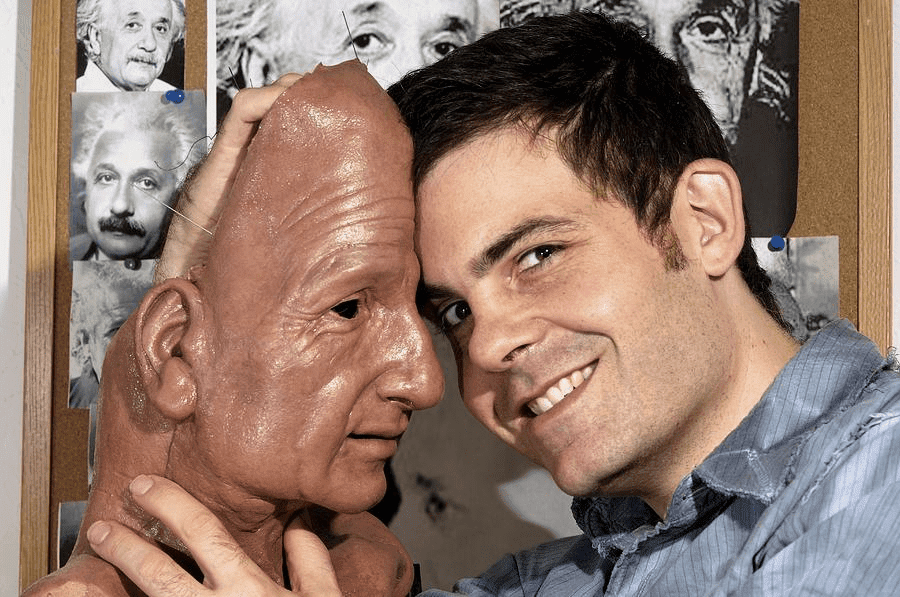
Equally notable is the robot head modeled after Albert Einstein. Inside, Hanson installed 32 motors to control facial expressions. Studies show these motors perform the same functions as the 48 facial nerves in a living person.
Hanson does not plan to stop there. During his time at Disney, he identified three key traits that every future robot must have: creativity, empathy, and compassion. In his view, combining these traits with artificial intelligence could create machines far smarter than humans.
David Hanson on the Potential of Robots
Like anyone who has found their life’s calling, Hanson believes that in the future, humanity will not be able to live without his robots. His priority is to give them a humanlike appearance. He argues this makes human–machine communication as seamless as possible.
Hanson is also convinced that his robots will greatly assist people. For example, they could work as service staff, security guards, educators, or simply as pleasant conversational partners.
It’s hard to ignore the vision of the Dallas inventor, as his predictions seem destined to become reality. Hanson’s creations are already in use at research and nonprofit institutions around the world, including the University of Cambridge, the University of Geneva, the University of Pisa, and various cognitive science and AI research laboratories.