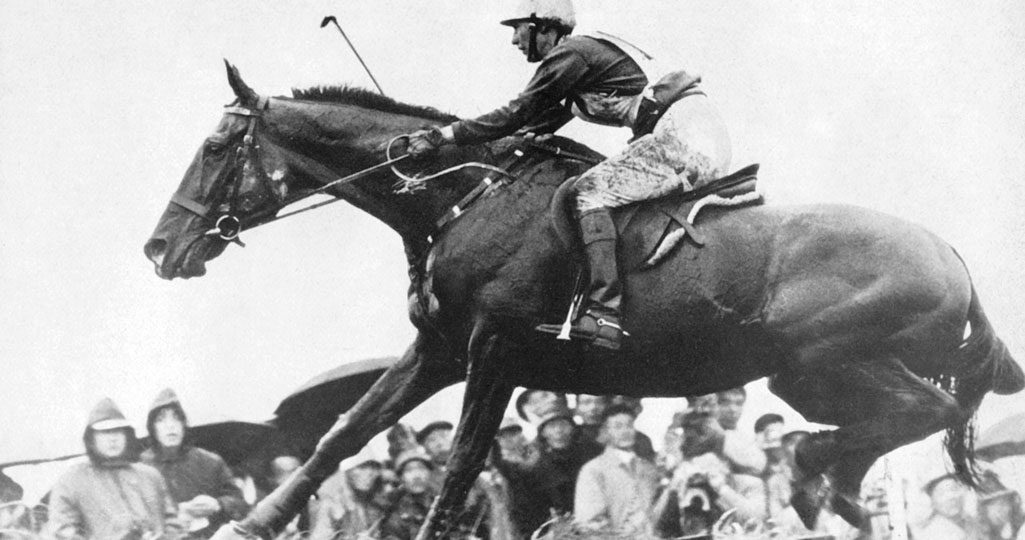

The history of horse racing in the United States is closely intertwined with the Texas city of Dallas. There, it became a local passion. From 1886, the State Fair of Texas began to be held in the city and horse racing was a popular pastime. Thus, many local residents were fond of horseback riding and the fair attracted thousands of visitors from all over the country. Read more on i-dallas.
Emergence of horse racing in Texas
The tradition of horse racing was brought to the United States by colonists. At the same time, as they gradually settled on the territory of the country, their preferences and culture spread. Texas was no exception. Horse racing began to develop with the arrival of settlers to the state.
Initially, Harkeyville became a center of horse breeding, as well as a place for training and racing. It was a small community that arose in 1856. For just over a decade, Harkeyville was known for its local racetrack. However, in 1907, the history of the community ended. Among our contemporaries, it is called a ghost place. It is mentioned only in the records of the location of the first racetrack in the state of Texas.
The State Fair of Texas as one of the most successful racetracks in the state
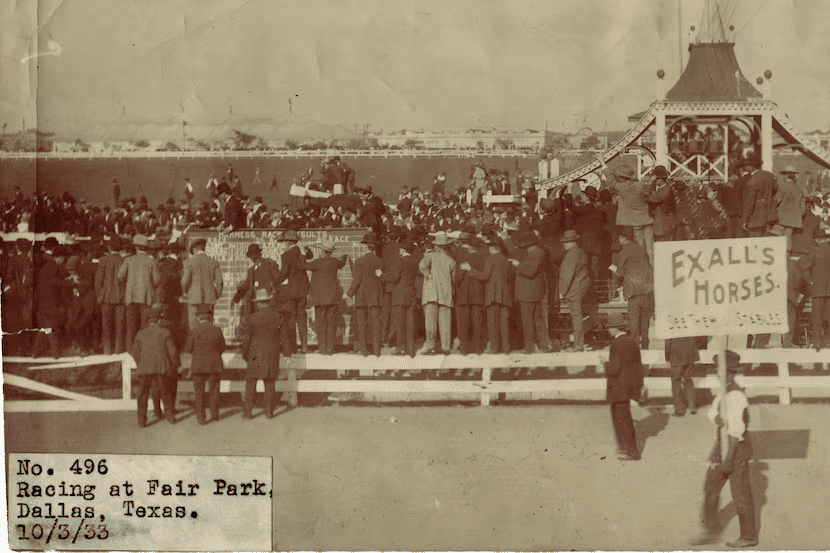
Horse racing at the State Fair of Texas began in the late 1800s. Until the end of the 1930s, this place was called one of the most successful racetracks in the state. Although, it had a rather complicated history.
According to the Texas State Historical Association, the initiative to create such an event belongs to C.A. Keating and W.H. Gaston. In 1886, they realized their idea. Later, due to numerous disagreements, the men stopped cooperating and began to compete for visitors. It is obvious that each of them wanted to attract the attention of more people. By that time, in 1901, horse racing in Dallas was already so popular that C.A. Keating and W.H. Gaston had to build two racetracks. None of the men and their associates wanted to miss the opportunity to make money. However, the two racetracks did not bring enough income to fully cover expenses. Therefore, the men decided to leave their quarrels in the past and unite for the development of one racetrack. For the next season, they jointly held an event called the State Fair of Texas and the Dallas Exposition.
Horse racing gambling ban in Dallas
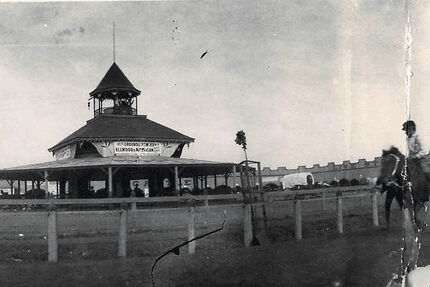
For many, riding a horse was not interesting. Thus, gambling became an integral part of the development of horse racing in Dallas. When it became possible to bet money on a particular horse or the outcome of a race, a much larger number of people began to visit racetracks.
In 1903, Dallas politician Curtis Hancock introduced a bill that banned betting on horse racing. In response, another bill was filed in the state legislature to allow gambling on the races under supervision. As noted in the Senate Journal of the 28th Legislature, Curtis Hancock’s bill was passed in full and the development of horse racing changed throughout the state of Texas.
The implementation of the new law significantly reduced the popularity of horse racing at the Texas State Fair racetrack. In addition, gambling and reciprocal betting (a system that allowed racetracks to receive a share of the bets placed) were illegal. Thus, the racetrack stopped making the profits it used to. In 1904, the racetrack was transferred to the ownership of the city of Dallas. In 1930, it was completely demolished and the construction of the Cotton Bowl multifunctional stadium began on that place.