
When people think of Dallas, they usually picture glass skyscrapers, oil company headquarters, cowboy hats, and bustling financial hubs. But if you step off the beaten path, the city reveals a completely different side. Over the last few decades, Dallas has consistently invested in public street art, transforming parking lots, blank factory walls, and open plazas into vibrant open-air galleries.
No tickets or museum-hush rules apply here. All you need is a pair of comfortable shoes and a willingness to look around. This guide from i-dallas.com covers the key locations shaping the city’s modern visual landscape.
The Surreal Sentinel of Main Street: Why a Giant Human Eye Sits in the Heart of Dallas
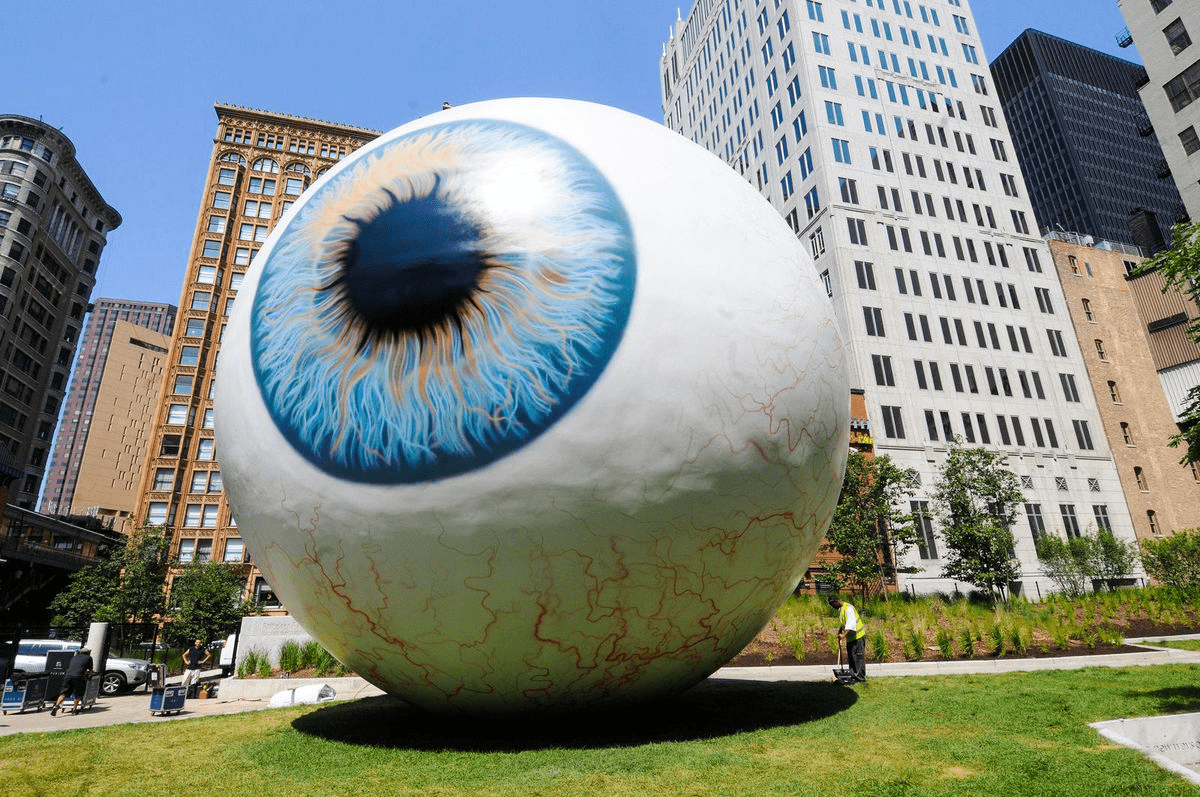
If you’re walking through Downtown Dallas for the first time, Main Street has a surreal surprise in store. Right across from the luxury hotel The Joule, behind a simple decorative fence, lies what might be Texas’s strangest art installation. Staring unblinkingly at pedestrians, office workers, and passing traffic is a giant human eyeball as tall as a three-story building.
Initially, this 30-foot eyeball left locals a bit puzzled. Today, however, it’s impossible to imagine Downtown Dallas without its watchful blue gaze.
A Fiberglass Self-Portrait
The idea behind this bizarre monument came from renowned Chicago artist Tony Tasset. In 2007, Tasset decided to experiment with scale and human anatomy, using his own eye as the model. The iris color, pupil depth, and even the fine web of veins on the sclera were meticulously copied from the original.
The sculpture’s technical execution and its journey to Dallas are filled with fascinating details:
- State-of-the-art materials: Molded from durable fiberglass typically used in shipbuilding, the sculpture was hand-painted with ultra-realistic detail and sealed with protective clear coats to withstand the harsh Texas sun.
- A past in Chicago: The giant eyeball originally made its debut in a Chicago park, and it wasn’t until 2013 that it was purchased and relocated to its current home in Texas.
- Private property: The lot where the sculpture sits is owned by The Joule, meaning you can only get up close and personal with the pupil during private events or wedding photoshoots.
- A new city icon: The sculpture quickly became Downtown’s ultimate photo op, replacing traditional industrial skylines on local postcards.
Art That Stops You in Your Tracks
When the giant eyeball first popped up among the sleek glass skyscrapers of the business district, it sparked intense local debate. Some saw it as a nod to Orwellian surveillance, others found it slightly unsettling to walk by, and art critics pondered its ties to conceptual pop art.
Ultimately, Dallas embraced the quirk. The massive eye did exactly what public art is supposed to do: it disrupted the daily grind. Today, hundreds of passersby stop along Main Street every day, pulling out their phones to capture a shot where the city stares right back—a reminder that even a bustling business hub can use a healthy dose of artistic madness.
The Steel Soul of Deep Ellum: How Three Giant Robots Reclaimed the Neighborhood’s History
For decades, the historic neighborhood of Deep Ellum was the beating heart of Texas jazz and authentic blues. However, during the second half of the 20th century, the area suffered a steep decline and was largely abandoned after factories and rail yards shut down. Today, Deep Ellum has experienced a stunning renaissance, emerging as Dallas’s premier arts district. Right at the intersection of its railroad heritage and modern visual culture stands the famous sculpture series, The Traveling Man.
Three Faces of a Railway Titan
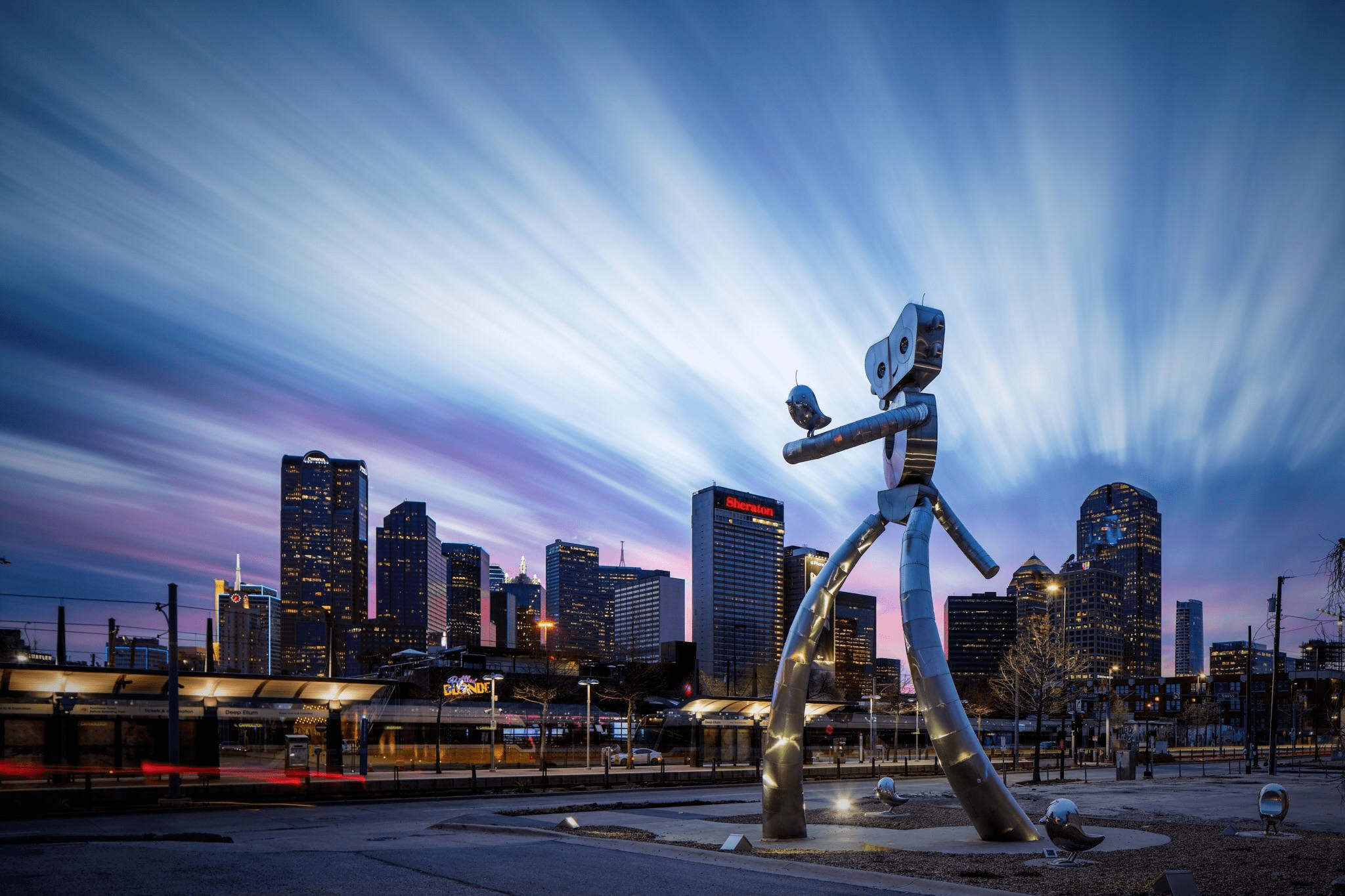
These three colossal figures, crafted from highly polished stainless steel, were created by renowned sculptor Brad Oldham in collaboration with Brandon Oldenburg and the Reel FX studio. The metal giants are more than just street decor; they serve as a living tribute to the railroad that sparked Deep Ellum’s development in the late 19th century.
Each sculpture in the series tells its own story, reflecting a different era in the neighborhood’s history:
- “Awakening”: This piece depicts only the giant head and hand of a metal robot symbolically emerging from the ground, representing the triumphant rebirth of the once-abandoned neighborhood.
- “Waiting on a Train”: A whimsical railway titan sits casually on the tracks with a guitar in hand, a nod to the deep blues and jazz roots of the area.
- “Walking Tall”: Standing at an impressive 38 feet, this towering figure strolls confidently alongside the modern light rail line, linking Dallas’s past to its future.
- The avian companions: Tiny metal birds flocking around the steel giant represent the creative spirits—poets, artists, and musicians—who have once again filled the neighborhood’s streets with energy.
Art Stitching Eras Together
These shiny installations have completely transformed the industrial spaces around transit stations. In place of gloomy railway embankments and dull grey fences, Dallasites now enjoy an open, interactive, open-air gallery.
The Traveling Man is a prime example of how public art can engage with local heritage without erasing the past, weaving history into a futuristic fairytale. Every day, the polished steel surfaces reflect the vibrant graffiti on neighboring walls, passing headlights, and the faces of new generations coming here for inspiration and energy.
Murals: From Street Graffiti to Monumental Canvas
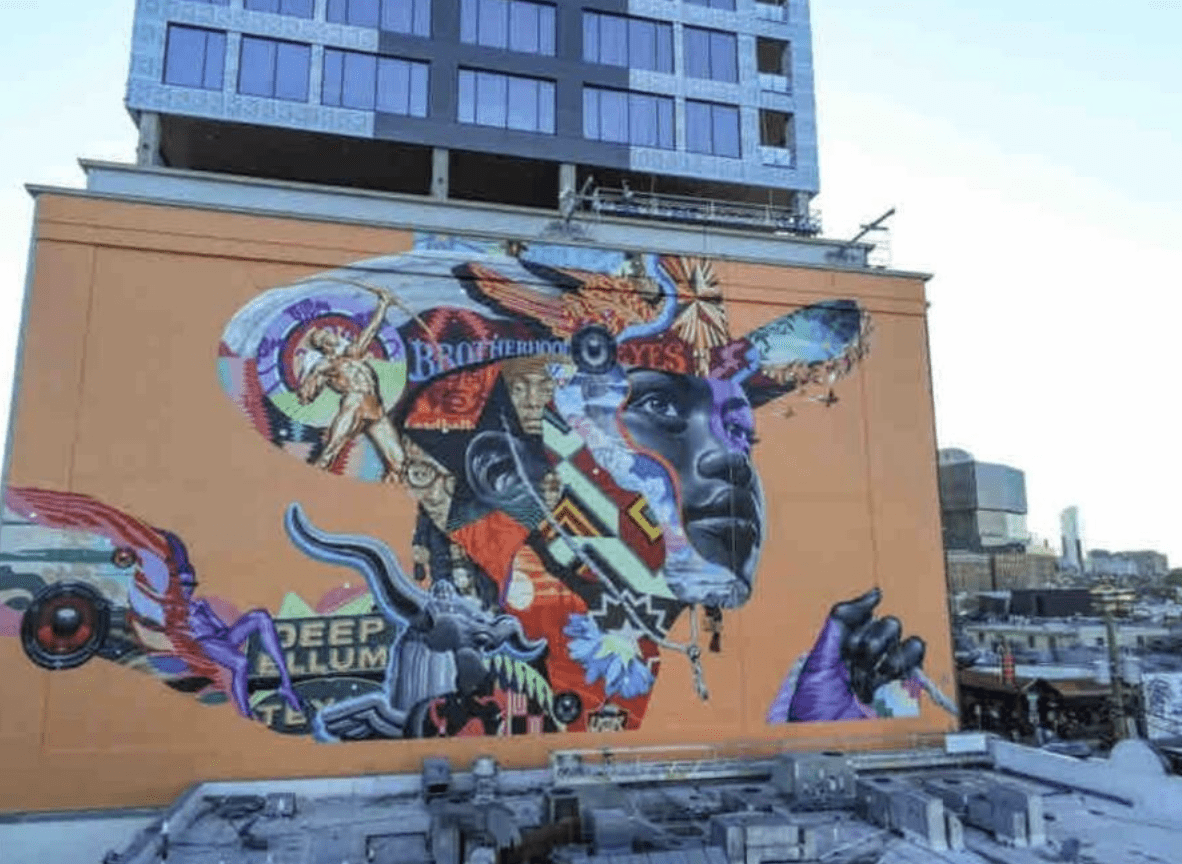
Step away from the giant steel robots and venture into the winding alleys of Elm, Main, and Commerce Streets, and the surrounding brick walls suddenly burst to life. Deep Ellum outgrew its status as a canvas for rogue adolescent graffiti long ago. Most of the massive murals here were created legally, thanks to the acclaimed 42 Murals project. Its curators brought together talented local Texan artists and prominent international names, giving them total creative freedom.
A Kaleidoscope of Genres and History on Brick
There is no single top-down concept or censorship here. The district’s walls reflect the multicultural, freewheeling spirit of Dallas itself, where classic styles effortlessly blend with the avant-garde.
The sheer artistic diversity of these street canvases is striking:
- Portraits of Texas blues legends: Highly realistic renderings of iconic musicians like Blind Lemon Jefferson, serving as powerful reminders of the neighborhood’s roots.
- Geometric and colorful abstractions: Bold conceptual blocks, clean lines, and complex optical illusions that completely distort the traditional brick-and-mortar geometry of old warehouses.
- Psychedelic and whimsical scenes: Surreal fantasies featuring mythical creatures and bizarre flora interwoven with elements of everyday urban life.
- Futuristic industrial landscapes: Bold artistic takes on the future of Texas, space exploration, and human-technology interaction in the cybernetic age.
An Ever-Evolving Exhibition
The most captivating feature of Deep Ellum’s murals is that this massive outdoor gallery is constantly changing. There is no museum-grade preservation or desire to lock these designs in time forever.
Every few years—or sometimes months—acclaimed works are painted over to make room for fresh statements, sketches, and voices of a new generation. This endless cycle of color and meaning makes every walk unique. What you photograph today might be history tomorrow, cleared away to make room for the next creative explosion.
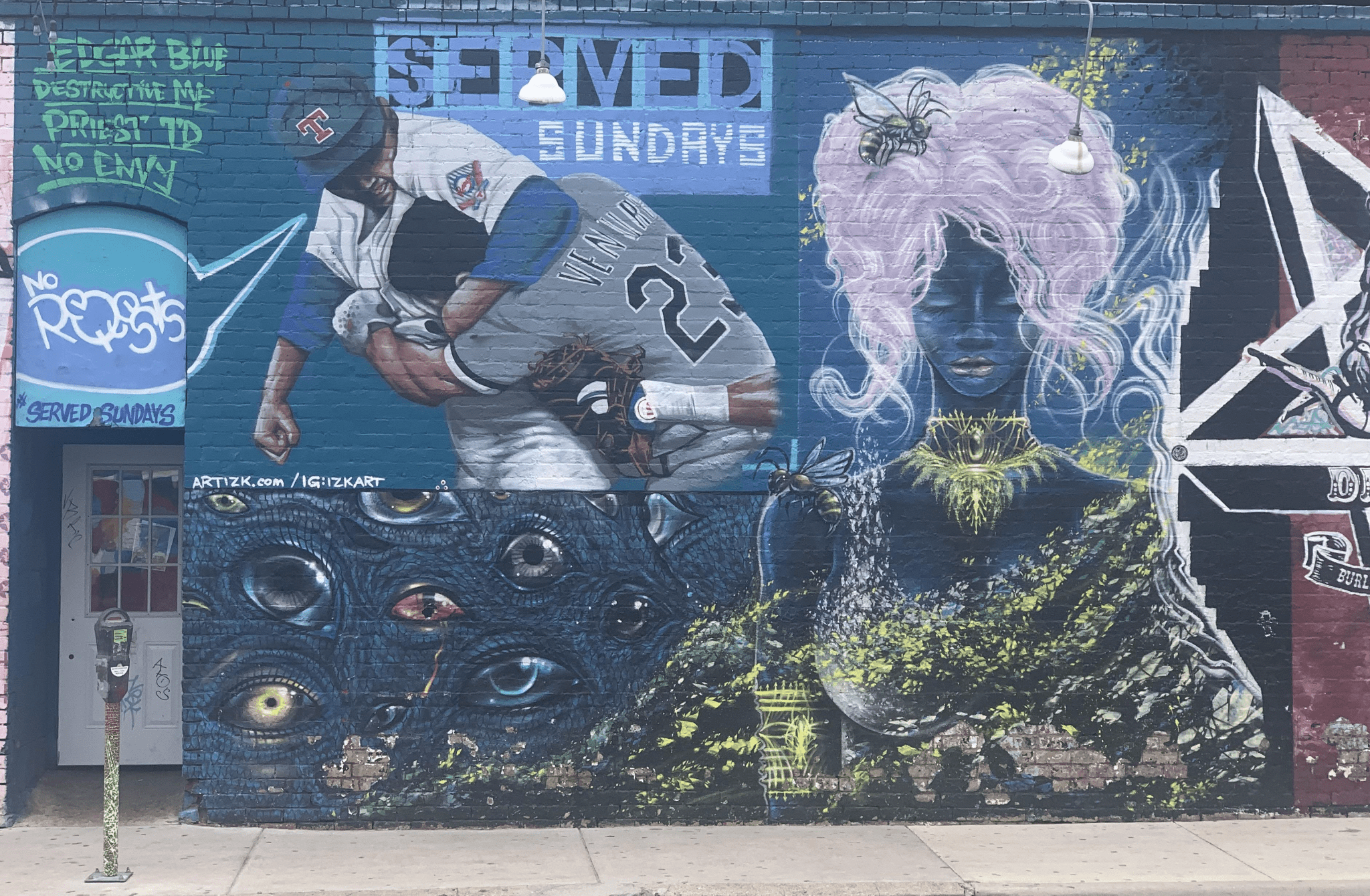
The Bronze Herd of Pioneer Plaza
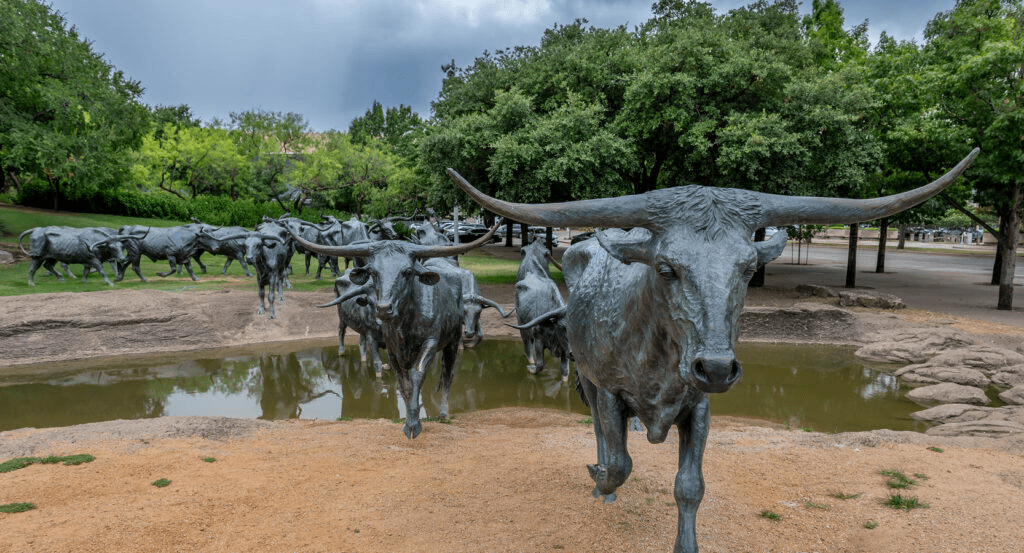
While it might not fit the classic definition of street art, this is the largest public sculpture installation in the city, capturing Texas history in breathtaking detail. At Pioneer Plaza, sculptor Robert Summers recreated a dramatic cattle drive along the legendary Chisholm Trail, which saw millions of steers driven across the state in the 19th century.
The monument features 49 bronze longhorns and three cowboy riders, all scaled to 1.5 times their actual size. Summers brilliantly captured the movement of the drive: the steers literally “run” down a man-made hill, navigate massive boulders, and splash across a flowing stream. Developed throughout the 1990s, the artist meticulously studied animal anatomy and period-accurate cowboy gear, down to the intricate details on the saddles and spurs.
The Cozy Walls of the Bishop Arts District
While Downtown Dallas and Deep Ellum impress with their massive scale, the Bishop Arts District in South Dallas offers a much more intimate experience. This low-rise 1920s neighborhood features converted warehouses and shops that now house independent coffee shops, bookstores, and galleries.
The murals here are smaller but highly interactive. One of the most popular is “The Love Equation,” a graphic brick-wall painting that serves as a go-to backdrop for photoshoots. Reflecting the neighborhood’s deep Latino roots, many works celebrate Mexican-American culture, including stunning murals of iconic singer Selena Quintanilla and artist Frida Kahlo.
Public art in Dallas isn’t just about covering up architectural flaws. It serves as an open dialogue between the city’s past and present, proving that industrial zones and commercial hubs can foster a rich visual culture of their own, far beyond the confines of a traditional gallery.